Staff Reporter
TURNING one of the country’s biggest environmental challenges into an economic opportunity, Namibia’s biomass sector is gaining recognition for its potential to create jobs, improve energy security and develop new value chains in charcoal, renewable energy, animal feed and biochar.
The Energy Sector Skills Strategy Report – Namibia, launched by the Namibia Investment Promotion and Development Board (NIPDB) in collaboration with the International Labour Organization (ILO), identifies biomass as an emerging sector with significant potential to support rural development and climate resilience.
According to the report, bush encroachment currently affects an estimated 45 million hectares of Namibia’s savanna rangelands, covering more than 60% of the country’s grazing areas. While historically viewed as an environmental challenge that reduces land productivity and threatens biodiversity, the report notes that harvested biomass is increasingly being transformed into valuable economic products.
The report identifies four key value chains driving Namibia’s biomass economy: charcoal production and exports, biomass-to-energy, animal feed production and biochar.
Charcoal remains the most established segment, with Namibia producing more than 200 000 tonnes annually and ranking among the world’s leading exporters. The industry supports more than 14 000 workers and contributes significantly to foreign exchange earnings.
The biomass-to-energy sector is also expanding, with applications ranging from industrial heat generation to large-scale electricity production. The report highlights the 40 MW Otjikoto Biomass Power Station near Tsumeb as a flagship project, representing an investment of about N$2 billion aimed at improving Namibia’s energy security through renewable power generation.
Another growing value chain is the production of animal feed from processed bush material. Known as boskos, the product combines milled bush fibre with supplements to create alternative livestock feed, helping farmers improve resilience during periods of drought.
The report further identifies biochar as an emerging opportunity, with the product used to improve soil quality, store carbon and generate potential carbon credit revenues. Facilities such as PyroNam are already processing biomass into biochar for environmental and agricultural applications.
Despite the sector’s growth potential, the report warns that Namibia faces a significant skills shortage, particularly in the “missing middle” of skilled technicians and supervisors between entry-level workers and highly specialised experts.
Critical skills gaps identified include modern carbonisation techniques, the operation and maintenance of biomass power systems, nutritional science for animal feed development, and carbon verification expertise required for international carbon markets.
To address these challenges, the report recommends establishing a National Biomass Skills Development Task Force, led by the Namibia Biomass Industry Group (N-BiG), to coordinate skills planning and curriculum development.
It also calls for the expansion of technical and vocational education and training (TVET) programmes through specialised qualifications in areas such as bush control, biomass utilisation and small business management.
Further recommendations include increasing the adoption of Forest Stewardship Council (FSC) certification to strengthen environmental standards and market access, while incorporating advanced biomass, biorefining and circular economy concepts into engineering and agricultural programmes at the University of Namibia (UNAM) and Namibia University of Science and Technology (NUST).
The report concludes that Namibia’s biomass sector has the potential to become a model for sustainable development by turning an environmental challenge into a source of economic growth, employment creation and climate action.
It emphasises that closing the skills gap will be essential to ensuring that the country can fully benefit from its biomass resources and build a competitive, sustainable industry.
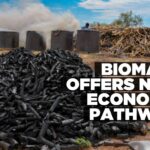
Picture for illustrative purposes only. Photo: NIPDB