Staff Reporter
THE Electricity Control Board (ECB) has announced that the Minister of Industries, Mines and Energy has, on the recommendation of the ECB and in accordance with Section 21(1) of the Electricity Act, 2007 (Act No. 4 of 2007), renewed the moratorium on the granting of generation licences for electricity export purposes.
The renewed moratorium is effective from 5 September 2025 for a period of 40 months, ending on 5 January 2029, or until the existing transmission network constraints are alleviated, whichever occurs first.
Nelson Ashipala, public relations officer at the ECB, said that the Modified Single Buyer (MSB) market framework currently allows private generators to develop generation capacity in Namibia for electricity export purposes.
“However, limited transmission capacity on the interconnectors within neighbouring South Africa continues to constrain the export of electricity from Namibia into the Southern African Power Pool (SAPP). This ongoing transmission constraint means that granting additional generation licences for export purposes at this time could create regulatory obligations that the network is not yet able to support. The renewal of the moratorium is therefore a responsible and prudent regulatory measure to protect the integrity of the Electricity Supply Industry (ESI) and the interests of existing and prospective licence holders,” Ashipala said.
He added that the ECB, in collaboration with NamPower, is currently assessing the available transmission capacity and is therefore discouraging the submission of new licence applications for export purposes until further notice.
The following categories are exempted, subject to the conditions outlined below:
Renewable energy generating plants that incorporate Battery Energy Storage Systems (BESS), intended specifically for night-time electricity export to SAPP, are exempted from the moratorium. This exemption is subject to confirmation of viability and night-time transmission capacity by the National Transmission Company of South Africa (NTCSA), and will be considered on a first-ready, first-served basis prior to any licence consideration by the ECB.
In addition, Namibian Independent Power Producers (IPPs) whose participation in transmission infrastructure upgrades within the NTCSA network has been formally confirmed by NTCSA are also exempt. This exemption applies only where the relevant upgrades are specifically intended to alleviate transmission congestion and unlock additional export capacity into SAPP.
Applicants seeking to rely on either of these exemptions are advised to provide formal written confirmation from NTCSA as part of their licence application submission to the ECB.
Ashipala said the ECB, in collaboration with NamPower, is currently assessing the available capacity and is therefore not considering the submission of new licence applications for export purposes until further notice.
“The ECB will not consider such applications until the moratorium is lifted, the applicable transmission constraints are formally confirmed to have been resolved, or the capacity assessment referred to above has been finalised. The ECB will revert to stakeholders and the public once this assessment has been finalised. The ECB remains committed to enabling a competitive, investment-friendly and sustainable Electricity Supply Industry (ESI) in Namibia.
“The renewal of this moratorium is not intended to discourage investment in local electricity generation; it is a targeted, time-bound measure to manage a specific and known infrastructure constraint responsibly,” Ashipala said.
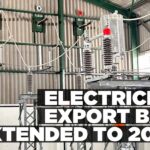
Picture for illustrative purposes only. Photo: ECB