
Staff Reporter
MINISTER of Works and Transport Veikko Nekundi has expressed satisfaction with progress on the upgrading of District Road 3616 in the Omusati Region from gravel to bitumen standard, while warning contractors involved in road projects to meet deadlines, maintain quality standards and comply with labour regulations.
Nekundi visited the Tsandi–Onesi–Epalela Road Project on Tuesday to assess progress, identify challenges, engage with workers and contractors, and review the implementation of the project.
The 48-kilometre road links Tsandi to Epalela via Onesi. At Epalela, it connects to the Outapi–Ruacana main road (MR92), while at Tsandi it links to three important routes: Tsandi–Omugulugombashe, Tsandi–Okahao and Tsandi–Outapi.
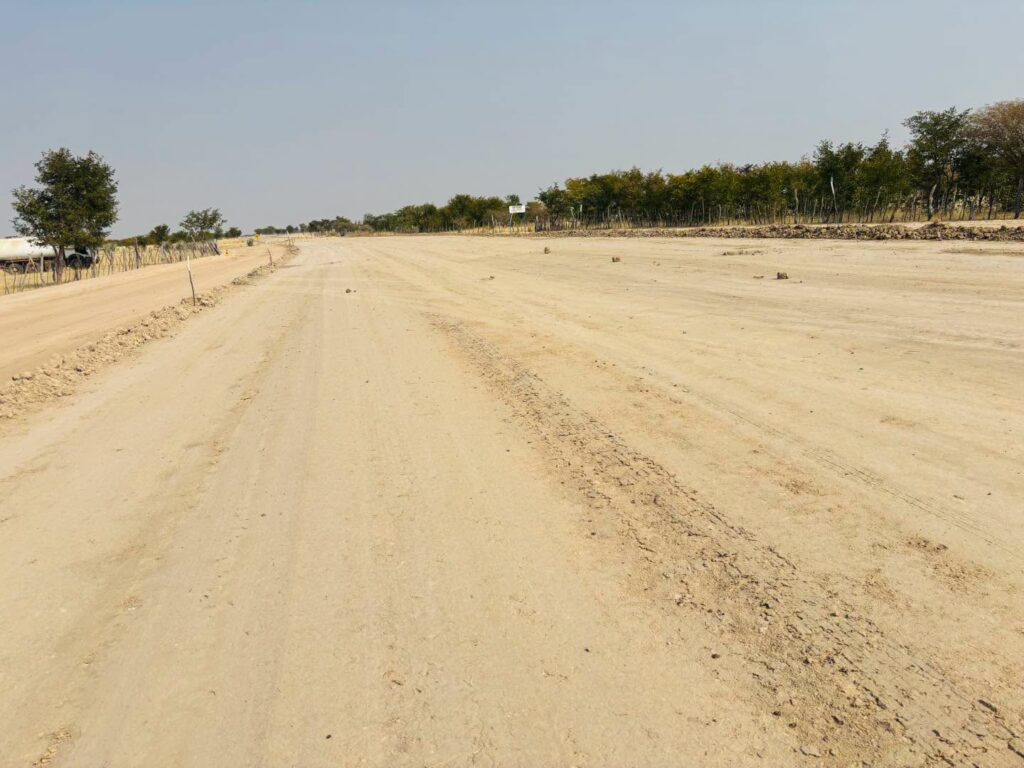
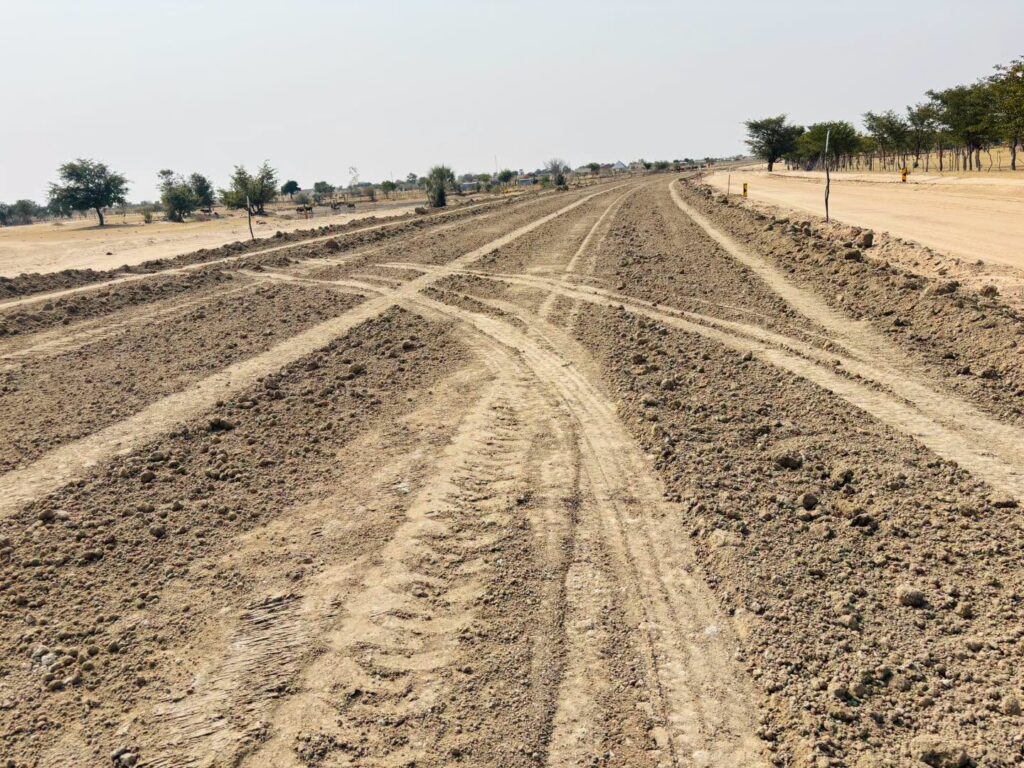
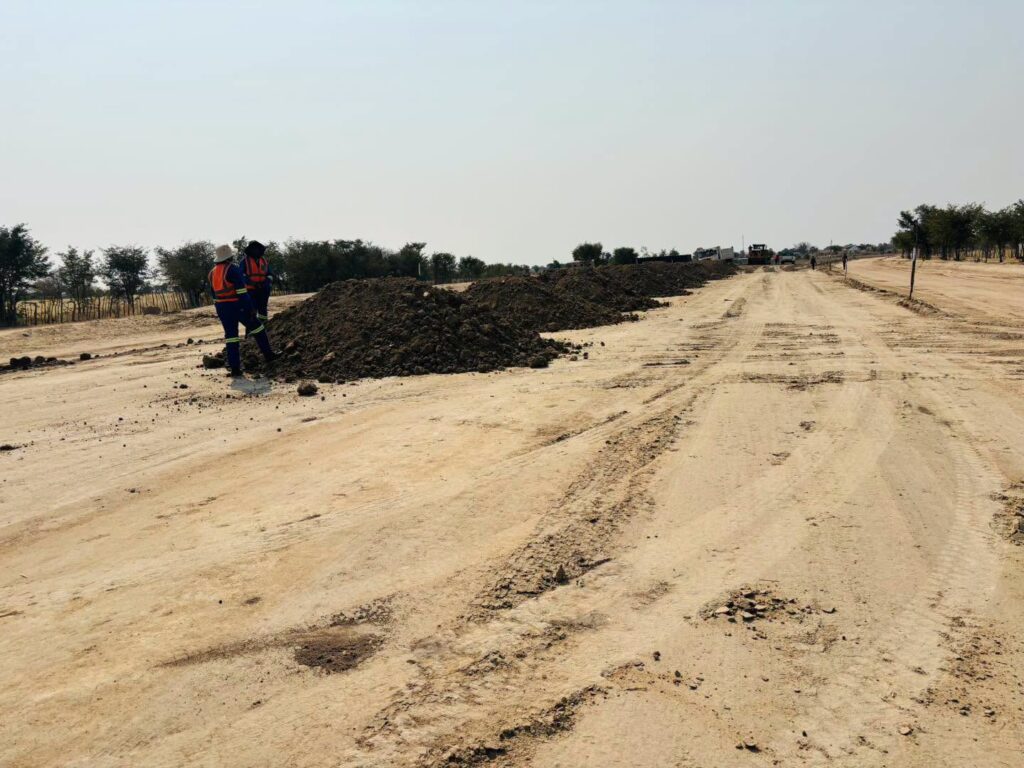

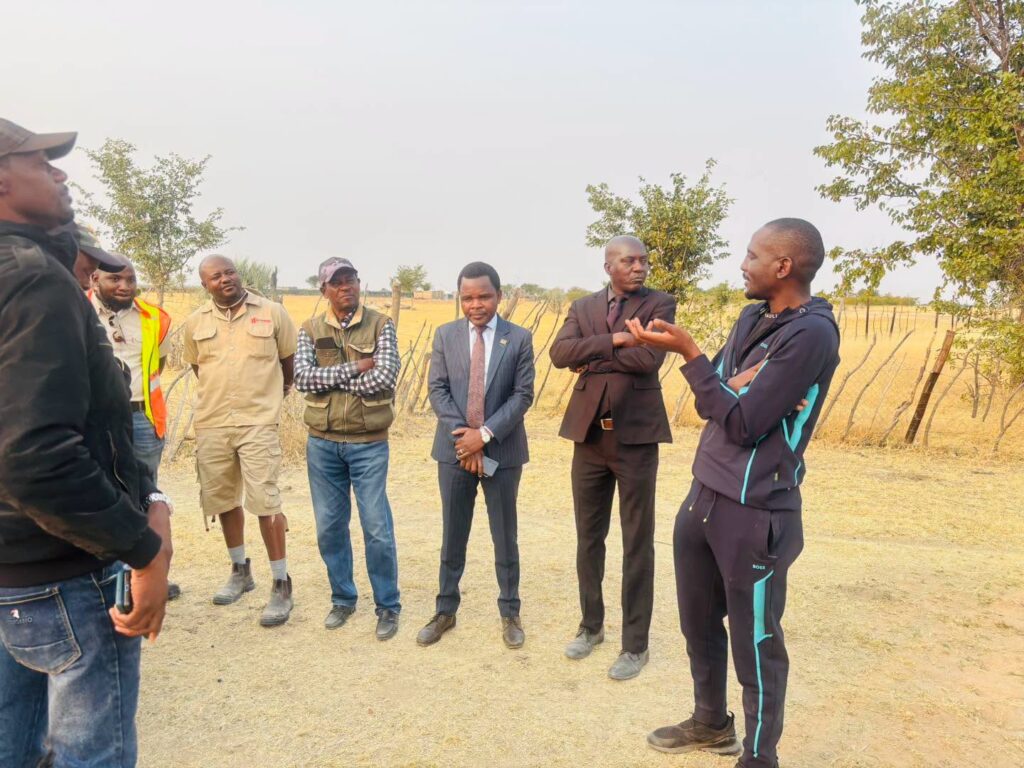
PICTURED: Works and Transport Minister Veikko Nekundi inspects progress on the Epalela–Onesi–Tsandi Road Project in the Omusati Region. Photos: MICT Omusati
The project, which involves upgrading the road from gravel to bitumen standard, is being implemented in 5-kilometre phases and is expected to be completed in 2028.
Phase 1 was awarded to Shange Civil CC and Indigenous Construction CC JV at a cost of N$26.5 million, while Phase 2 was awarded to the same contractors at a cost of N$20 million.
The project was officially handed over in November 2025 by Omusati Regional Governor Immanuel Shikongo, whose office has continued to follow up on instructions issued to contractors.
During the inspection, Nekundi said progress had been recorded since construction began, but noted that several stages of work still needed to be completed before the project could be finalised.
He explained that construction was initially planned to start from Onesi but was later adjusted to begin from Epalela towards Onesi and Tsandi. He added that contractors had identified sections where bridges would be constructed to improve water flow towards the Etaka area.
The Minister urged community members to remain patient, saying road construction requires careful planning to ensure the correct materials and equipment are used to deliver durable infrastructure.
Shikongo welcomed the progress made on the project but raised concerns about an approximately 300-metre section between the start of the current road section and the existing road, where sand accumulation and uneven levels have affected connectivity.
The consultant confirmed that G7 material was unavailable for the project, but that G5 material could be sourced. Plans were also in place to level the affected section and construct suitable bridges to improve water flow.
The contractor currently employs 33 workers, of whom 21 are from the local community. According to the project update, local employees have been provided with personal protective equipment, are paid according to government-gazetted rates, have employment contracts and are registered with the Social Security Commission.
Nekundi’s visit to Omusati followed inspections of several ongoing infrastructure projects in the Kunene Region, including the Opuwo–Okanguati and Opuwo–Etanga roads, the Oute Bridge, the Kaoko Otavi–Opuwo road and the Opuwo Aerodrome project.
During those inspections, the Minister stressed that contractors must complete government-funded infrastructure projects within agreed timelines and maintain acceptable standards.
He said improved road networks are essential for road safety, easier movement and economic development, adding that delays and poor workmanship would not be tolerated.
Nekundi also instructed contractors to comply with labour regulations by ensuring workers receive employment contracts, are paid on time and are treated fairly. He further encouraged the employment of local residents through temporary job opportunities to increase community participation in economic activities.
The Minister’s inspection followed complaints from communities about the poor condition of some roads, particularly sections where difficult terrain has made travel challenging.
“There is a particular section where we are now moving further behind me, which is a stretch of plus-minus 15 kilometres. It takes approximately two hours to drive over the 15 kilometres,” Nekundi said during the Kunene visit.
He said government remains committed to improving road infrastructure and addressing challenges affecting communities across the country.