Staff Reporter
NAMIBIA has achieved one of the highest levels of urban water access in Africa, with 98% of urban residents and 83% of rural residents having access to water. However, government officials say significant challenges remain in expanding sanitation services and upgrading ageing infrastructure to meet national and continental development targets.
The issues were highlighted during the 2026 Africa Public Service Day (APSD), held at the Dome MTC Conference Facility in Swakopmund, where delegates discussed progress and obstacles in achieving universal access to water and sanitation.
Acting Deputy Executive Director for Water Resource Management, Maria Amakali, said Namibia has made substantial progress in improving access to safe drinking water, with the national average standing at 91.4%.
She added, however, that access to basic sanitation remains considerably lower at only 60%, underscoring the need to accelerate investment in sanitation infrastructure.
Amakali said Namibia’s geographical landscape and dispersed rural settlements continue to pose challenges in extending water and sanitation services to all communities.
She explained that providing services in rural areas is complicated by the long distances between settlements, while urban areas are under increasing pressure from the rapid growth of informal settlements that require new infrastructure.
Another major concern raised during the conference was the deterioration of existing water infrastructure, with many local authorities struggling to maintain ageing systems inherited over many years.
Amakali said municipalities also face shortages of skilled professionals, including engineers, hydrologists and artisans, as the mining sector continues to attract many qualified technical specialists.
To address these capacity constraints, she called for greater integration of graduates from Vocational Training Centres (VTCs) into local government systems to strengthen operations and maintenance.
“It is of little value to have water resources if the infrastructure required to deliver them is not functioning properly,” she said.
This year’s Africa Public Service Day was held under the theme, “Achieving Universal Water Availability and Safe Sanitation by 2063,” in line with the African Union’s Agenda 2063.
Amakali said Namibia is also working towards achieving Sustainable Development Goal 6 by 2030, with government focusing on strengthening institutions responsible for planning, regulating and delivering water and sanitation services, while promoting greater collaboration between utilities, local authorities and communities.
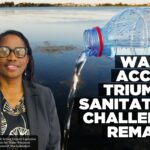
Photo: Ministry of Agriculture, Fisheries, Water & Land Reform/Magnific