
Staff Reporter
PREPARATIONS are gaining momentum for the Comprehensive Nuclear-Test-Ban Treaty Organization’s (CTBTO) Integrated Field Exercise 2026 (IFE26), with Namibia set to host the organisation’s largest-ever on-site inspection exercise involving around 250 participants from across the world.
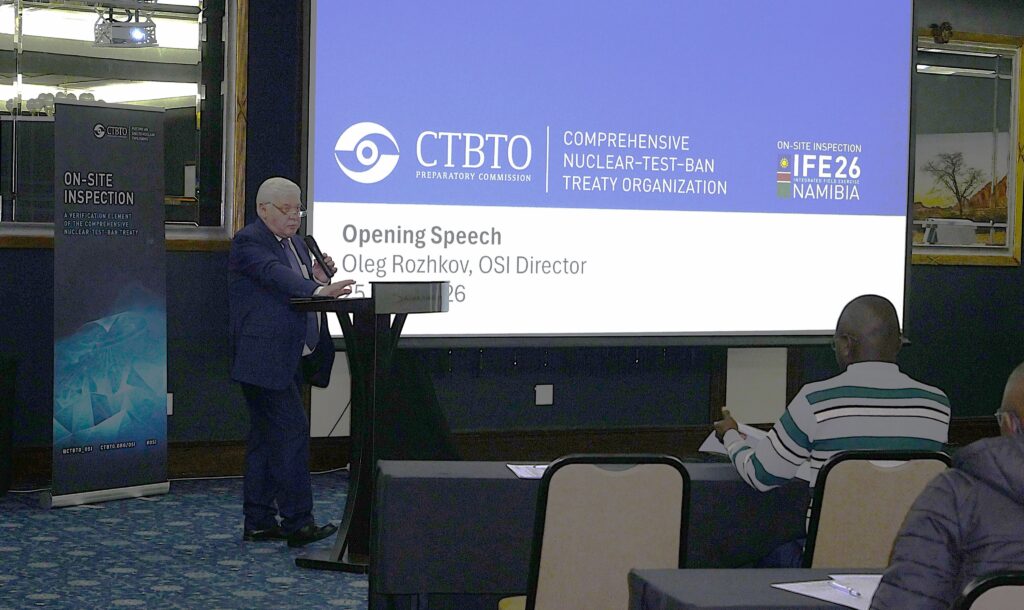
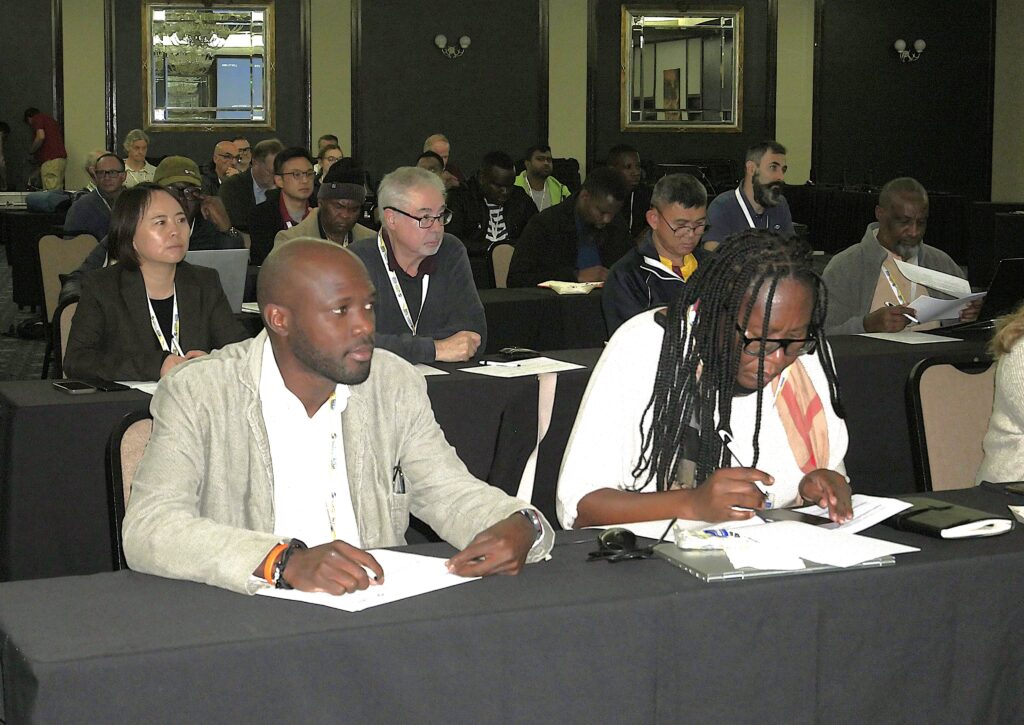
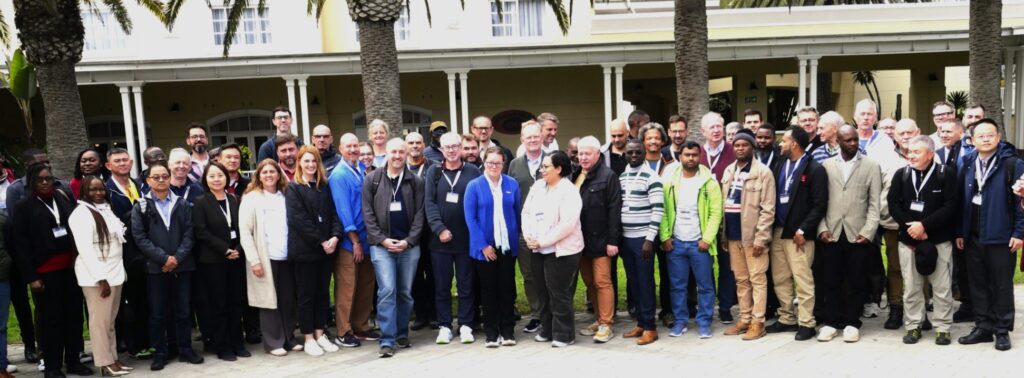
Recent preparations included the training of surrogate inspectors and a planning mission involving 48 experts from 18 countries, who met with Namibian government officials in Windhoek before travelling to Swakopmund to test communications and data telemetry equipment under field conditions.
The experts will perform various roles during the exercise, including coordination, logistics, scenario management, performance evaluation and capturing lessons learned, helping ensure the country’s readiness to host the large-scale international exercise.
Photos: CTBTO
CTBTO Executive Secretary Robert Floyd said on-site inspections are a critical component of the global nuclear test verification regime.
“While we rely on the International Monitoring System (IMS) for detecting nuclear test explosions, the final confirmation must still come from what is found on the ground, which is where on-site inspection will complete the picture. A CTBTO on-site inspection is designed to provide a clear, shared account for all to see, removing any chance of doubt or misinterpretation,” Floyd said.
The six-week Integrated Field Exercise will take place from 10 October to 20 November 2026 and will be the third large-scale on-site inspection exercise organised by the CTBTO, following similar exercises held in Kazakhstan in 2008 and Jordan in 2014.
According to the CTBTO, the exercise is designed to simulate a real on-site inspection as closely as possible, allowing inspectors and technical experts to test operational procedures under challenging field conditions.
Director of the CTBTO’s On-Site Inspection Division, Oleg Rozhkov, said the exercise will bring together approximately 250 participants from around the world.
“IFE26 is expected to bring together around 250 participants from across the world, who will apply their training and expertise in a scenario designed to be as close to a real on-site inspection as possible and set in a challenging operating environment,” Rozhkov said.
He explained that the exercise is intended to assess and demonstrate current on-site inspection capabilities, identify areas for improvement and strengthen the organisation’s operational readiness.
Participants will include surrogate inspectors nominated by States Signatories, national technical experts, CTBTO staff and external evaluators. Around 150 tonnes of specialised equipment are expected to be transported to Namibia by sea and air for the exercise.
Integrated Field Exercises are among the CTBTO’s most complex activities, testing nearly every aspect of an on-site inspection, including field operations, inspection techniques, data management and logistics within a realistic scientific scenario.
On-site inspections will become operational once the Comprehensive Nuclear-Test-Ban Treaty enters into force. Under the treaty, a State Party may request an inspection if it suspects a nuclear test explosion has occurred, subject to approval by the CTBTO Executive Council.
Namibia signed the Comprehensive Nuclear-Test-Ban Treaty in 1996 and ratified it in 2001. The country hosts two certified International Monitoring System facilities near Tsumeb—Auxiliary Seismic Station AS67 and Infrasound Station IS35—which contribute to the global monitoring network used to detect nuclear test explosions.
Preparations for IFE26 build on a series of field activities conducted between 2022 and 2025, including a Build-up Exercise held in Hungary in 2024, which served as the final preparatory phase before the full-scale exercise in Namibia.