


Staff Reporter
ANNA Tases (55) of Schlip is using her sewing skills to support her family while encouraging young people in her community to learn a trade that could help them earn a living in an area where employment opportunities remain limited.
For more than a decade, Tases has relied on needlework to generate an income, making and altering clothing for residents of Schlip and surrounding areas. While the work helps her provide for her household, she says her greatest ambition is to see local youth learn the skill and use it to create opportunities for themselves.
Tases moved to Schlip in 2009 after her employers relocated to South Africa. It was while working for a woman involved in sewing that she developed a passion for needlework.
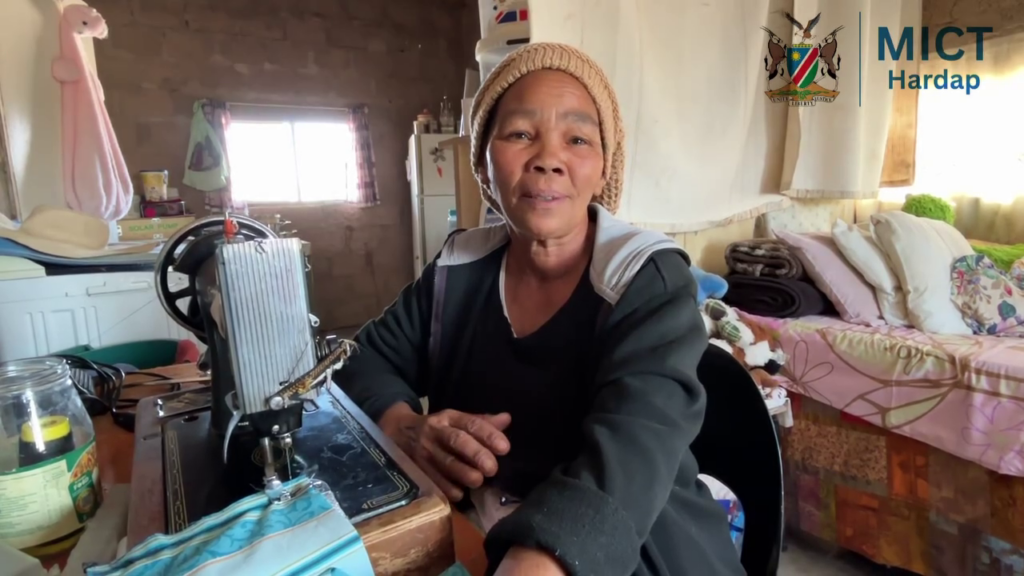

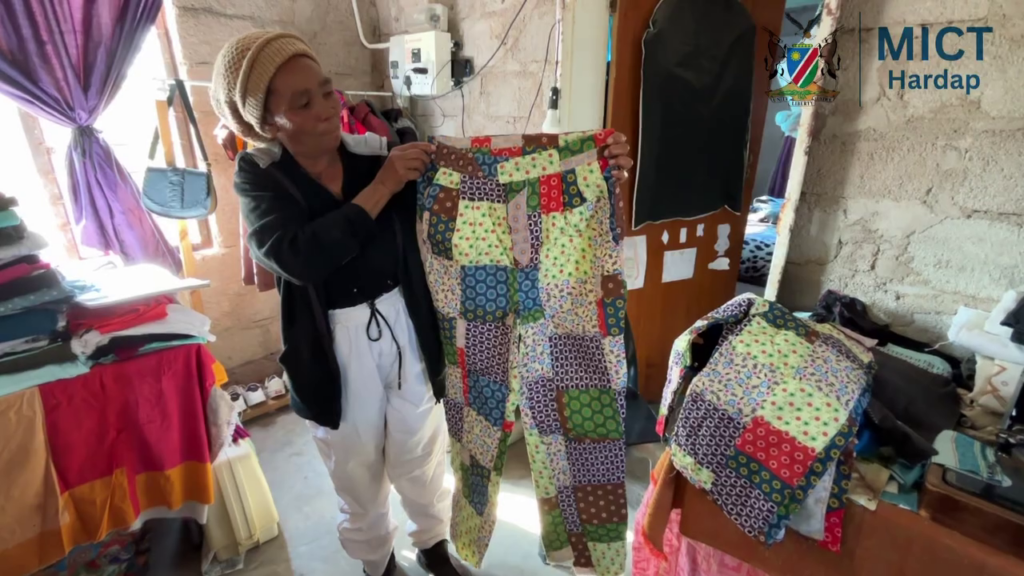

Photos: MICT Hardap Regional Office
“When I came here, I decided to start doing things with my own hands. I made two or three dresses and then people started asking me to make things for them,” she said.
Initially working by hand, Tases later received a sewing machine from her husband, allowing her to expand her services. Since then, she has been making and altering clothing for community members.
She said financial constraints prevent her from purchasing her own fabric, but she works with materials provided by customers.
“I make whatever people bring me fabric for. That is how I have managed to keep busy with sewing until today,” she said.
Her services remain affordable, with Nama dresses costing about N$250 to make, shirts around N$150, and smaller alteration jobs ranging between N$30 and N$50 depending on the work involved.
In addition to sewing, Tases supplements her income by selling second-hand clothing donated by people she knows in Windhoek. The clothes are sold at modest prices, ranging from N$10 to N$60.
The income helps her support her family, including children attending school.
Tases believes sewing can provide a valuable source of income for young people, particularly in communities where jobs are scarce. However, she says few are willing to learn.
“Young people come to me to ask me to make things for them, but they do not really want to learn,” she said.
She often encourages them to observe her while she works so they can understand the process and eventually develop their own skills.
“I feel it is something people should learn. In Schlip there are not many job opportunities. My heartfelt wish is for young people to stand up and do something with their hands,” she said.
Despite her efforts to mentor interested youth, Tases says many have yet to take up the opportunity. Nevertheless, she remains hopeful that more young people will recognise the value of learning practical skills that can help them build a better future.


