
Staff Reporter
JAPAN’S football supporters have once again drawn international praise after cleaning up their seating area following the team’s FIFA World Cup 2026 Group F match against the Netherlands, continuing a tradition that has become closely linked to Japanese football culture.
After Japan’s entertaining 2-2 draw against the Netherlands in Dallas, images and videos circulated widely showing fans collecting rubbish and leaving the stadium section clean before departing. The gesture attracted admiration from football supporters worldwide, with FIFA also sharing footage of the clean-up effort.
Japanese fans have gained a reputation at major sporting events for tidying venues after matches, a practice first widely noticed during Japan’s World Cup debut in 1998 in France. Since then, similar scenes have been witnessed at multiple World Cups and international competitions, including the 2022 tournament in Qatar.


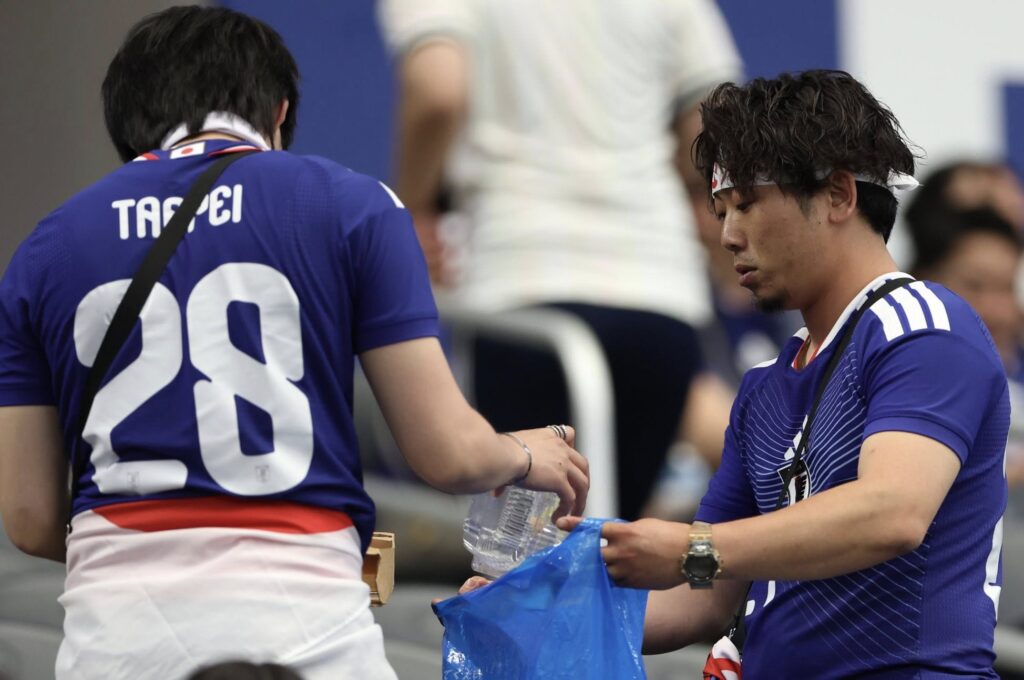

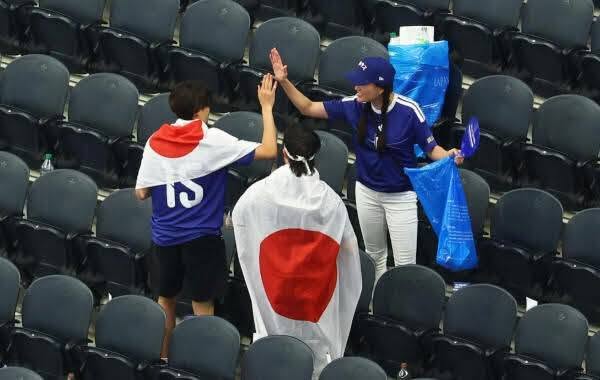


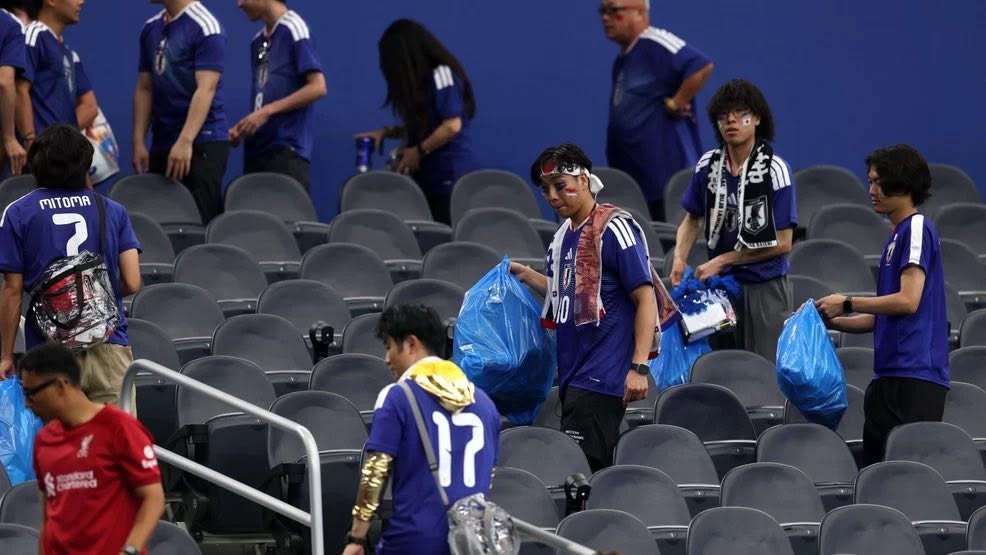
During the Qatar World Cup, Japan supporters cleaned their section of the Khalifa International Stadium after their surprise 2-1 victory over Germany, and were also seen collecting rubbish after the opening match between Qatar and Ecuador, despite their own team not being involved.
The tradition is often linked to the Japanese saying, “Tatsu tori ato wo nigosazu”, which translates to “a bird leaves nothing behind” and carries the meaning of leaving a place in the same condition in which it was found.
According to experts, the behaviour reflects values instilled from childhood in Japan, where students are often responsible for cleaning their own classrooms and school facilities.
Sociologist Scott North of Osaka University previously explained that cleaning up after football matches is an extension of habits developed through education, where cleanliness, responsibility and consideration for others are emphasised.
He noted that the practice also allows Japanese supporters to demonstrate pride in their culture while sharing those values with the world.
Japan-based journalist Scott McIntyre described the clean-up tradition as part of wider Japanese society, saying football reflects cultural values where cleanliness and respect for shared spaces are highly regarded.
Similarly, Koichi Nakano, a politics and history lecturer at Sophia University, said Japanese fans’ behaviour at international sporting events is influenced by the moral education they receive from an early age.
Experts also point to a strong social expectation in Japan not to inconvenience others. Barbara Holthus, deputy director of the German Institute for Japanese Studies in Tokyo, said Japanese people are socialised from a young age to avoid causing inconvenience and to take responsibility for their surroundings.
The actions of Japan’s supporters at the 2026 World Cup have once again highlighted how football can serve as a reflection of cultural values beyond the game itself.
Sources: ESPN/AP/BBC/FIFA/Getty Images