Staff Reporter
THE Directorate of Veterinary Services has urged travellers and the general public to exercise caution when visiting areas where seals are found, following confirmed rabies cases in some Namibian Cape fur seals.
“The first ever case to be reported in Namibian seal population was on 16 June 2025 at Walvis Bay Lagoon (Veterinary Public Notification No. 19 of 2025). However, three more cases were confirmed at Pelican Point in Walvis Bay, Erongo region between 8 – 13 November 2025,” Kenneth Shoombe, the Chief Veterinary Officer within the Directorate of Veterinary Services, said.
He revealed that one of the three seals was found displaying clinical signs of rabies and succumbed to the disease on the same day, while the other two seals were found dead by veterinary officials during active rabies surveillance. Shoombe confirmed that samples from the three seals tested positive for rabies at the Central Veterinary Laboratory (CVL) in Windhoek.
“The Directorate would like to urge travellers and the general public to be cautious when visiting areas where seals are found and to be on the lookout for any of the rabies signs in seals,” he urged.
Shoombe highlighted aggressive behaviour, disorientation, unusual vocalisations, excessive salivation, tameness, paralysis and lethargy as some of the symptoms of rabies.
The public is therefore advised to avoid close contact with Cape fur seals and to report suspected rabies cases to the State Veterinary Office, fisheries officials, environment officials or the Namibian Police.
“If a person is bitten or scratched by a seal, immediately wash the wound thoroughly with soap and water for 10 to 15 minutes; seek urgent medical attention and inform hospital that the seal may be rabid in order to receive post-exposure prophylaxis (PEP) without delay; and report the incident to local health or veterinary authorities,” Shoombe advised.
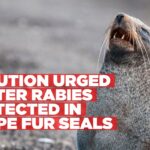
Picture for illustrative purposes only. Photo: Contributed