


Business Reporter
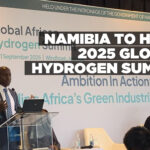
THE Namibia Investment Promotion and Development Board (NIPDB) has officially launched the 2025 Global Africa Hydrogen Summit, which will take place from 9 to 11 September in Windhoek, under the continued patronage of the Government of the Republic of Namibia.
Dr. Nangula Nelulu Uaandja, the CEO of the NIPDB, said that the inaugural edition of GAH2S established Namibia not only as a global frontrunner in green hydrogen but as a credible convener of dialogue and investment around Africa’s green industrial revolution.


Photos: RDJ Publishing
“Over 1,400 delegates from 65 countries attended. We facilitated 30 investment roundtables, hosted 75 global exhibitors, and secured nine memorandums of understanding and investment partnerships. We generated more than USD 3.5 million in direct economic impact, but more than that, we positioned Namibia as a hub of action, not just ambition. As the Namibia Investment Promotion and Development Board, our mandate is to go beyond rhetoric — to translate potential into pipelines and intentions into impact. While Namibia’s endowments — from our renewable energy potential to our political stability — remain unmatched, they are not sufficient on their own. Our long-term competitiveness depends on what we do with those advantages,” Dr. Uaandja said.
She added that this is the reason the NIPDB is focused on building a robust investment ecosystem for green hydrogen and its derivatives — one that is defined by clear rules, investible projects, skilled people, and forward-looking partnerships.
In the lead-up to the 2025 Summit, she said that the NIPDB’s strategy centres on strengthening the investment climate through regulatory streamlining, legislative adaptation, and incentives that reward innovation and localisation.
In addition to this, she added that the board will develop local supply chains and enterprise capabilities, so Namibian firms can supply inputs, services, and technologies across the hydrogen and clean energy value chains.
“Upskilling our labour force, particularly women and youth, through technical partnerships, curriculum alignment, and hands-on experience in hydrogen-related sectors is key,” Dr. Uaandja said, adding that NIPDB, in partnership with the International Labour Organisation (ILO), has conducted a Namibia skills strategy on all the energy sub-sectors focusing on business capabilities, decent employment, skills supply and demand, and how constraints can be addressed — with green hydrogen as a particular focus.
“We are proud that the Climate Investment Funds (CIF) recently ranked Namibia first on the African continent in terms of readiness for just energy transition financing — ahead of South Africa, Egypt, Morocco, and Kenya. This ranking is a testament to our whole-of-government approach, our enabling policy reforms, and our commitment to social and economic inclusion in the energy transition.
Our position on inclusion is clear: we do not seek to lead in isolation. Namibia’s success must serve as a platform for broader African prosperity. That is why we extend a continental invitation — to our peers, partners, and policymakers — to co-create Africa’s green industrialisation journey together,” Dr. Uaandja said.
She added that this year’s summit will be more inclusive and more ambitious.
“We have taken deliberate steps to bring in more youth voices, more local SMEs, more academic and community stakeholders, and more continental partners. We are expanding the Innovation Zone, enhancing support for Namibian and African exhibitors, and strengthening regional cooperation platforms. A just energy transition cannot be driven by a few — it must be co-created by many. The 2025 edition of the Global Africa Hydrogen Summit will be a pivotal moment — not only for Namibia, but for the continent. It will serve as a convergence point for investment, policy, technology, and leadership. Together, we will shape Africa’s role in the global green economy. We must also recognise that the economic transformation we seek requires a shift in our industrial base. If we want to move beyond dependence on commodity exports, we must focus on developing industries that produce more complex and diversified outputs — from green ammonia and synthetic fuels to green steel and fertilisers. These are the products that deepen value addition, stimulate innovation, and strengthen economic resilience,” Dr. Uaandja concluded.


