


Maria David
MINISTER of Health and Social Services, Dr. Esperance Luvindao, has highlighted the ongoing challenge of malaria in Namibia, emphasizing that local transmission remains the primary source of infections.
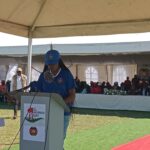
Speaking at the May Day commemoration in Oshakati on Thursday, Luvindao provided detailed statistics on the current malaria situation.
According to the minister, a total of 56,130 malaria cases were reported across ten endemic regions: Ohangwena, Omusati, Oshana, Oshikoto, Otjozondjupa, Omaheke, Kavango West, Kavango East, Kunene, and Zambezi.
She indicated that out of the total cases, they have also recorded 5,226 admissions/severe cases and 95 deaths.
“Out of the total reported cases, a significant 45,649 were attributed to local transmission, accounting for 81 percent of the overall malaria burden,” she said.
She added that these cases are defined as infections acquired within Namibia’s borders through bites from infected female Anopheles mosquitoes.
Further, Luvindao indicated that imported malaria cases—resulting from mosquito-borne transmission outside of Namibia—numbered 10,466, representing 19 percent of the reported cases.
Luvindao emphasized that malaria remains a significant health challenge in Namibia, with ongoing outbreaks in several endemic regions.
The Ministry of Health and Social Services (MoHSS) is actively working with communities and partners to reduce transmission through preventive measures and treatment.
“Overcoming misconceptions and ensuring active community participation are key to the country’s goal of eliminating malaria,” she said.
Recognizing the seasonal nature of malaria, with cases increasing during the rainy season, Luvindao issued a strong call to action.
She urged all Namibians, across all sectors, to unite in a determined national effort to combat this public health threat.
“I call upon every individual to take personal responsibility by engaging at least one or two others—be it a family member, colleague, or neighbour—to raise awareness about the critical importance of seeking prompt medical attention at the nearest health facility at the first sign of malaria symptoms,” she concluded.
She then appealed to all employers, workers, trade unions, professional associations, and federations to take an active role in mobilizing their members.
“Encourage every employee, every member, and every community member to prioritize their health and that of their families by recognizing the symptoms early and seeking immediate treatment,” she added.
She stressed that timely diagnosis and care remain the most effective weapons in this fight. Together, through coordinated action, they can protect lives, reduce transmission, and ultimately eliminate malaria from their beloved nation.


