


Maria David
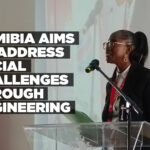
ASSOCIATE Dean of the School of Engineering and the Built Environment, Dr. Petrina Johannes, said that engineering is not merely about solving problems—it is about creating futures.
She made the remarks during the inaugural International Engineering Conference on Sustainable Emerging Innovations and Technological Advancements (UNAM-IEC-2024) held at the Jose Eduardo dos Santos Campus in Ongwediva on Monday.
According to Dr. Johannes, the conference serves as a forum for critical thinking, robust discussion, and transformative collaboration.


She highlighted that the conference aligns with Namibia’s development frameworks, including Vision 2030, the National Development Plans (NDPs), SADC Agenda 2050, Africa Agenda 2063, and the Sustainable Development Goals (SDGs).
“Together, we aim to address challenges such as high unemployment, energy insecurity, underdeveloped manufacturing, and water scarcity while fostering economic diversification and social well-being,” she said.
She added that Namibia’s achievements in road infrastructure demonstrate engineering excellence, but challenges remain.
Dr. Johannes emphasized that aging infrastructure, high road fatality rates, and the need for reliable water and energy access are critical for social and economic progress.
She also added that selected papers from the conference will be published in Scientific.Net, ensuring the ideas and solutions shared reach a global audience and contribute to a broader dialogue on sustainable engineering and innovation.
Meanwhile, the Secretary General of the Namibia National Commission for UNESCO, Gernot Piepmeyer, pointed out that innovation and engineering are inherently intertwined, with engineering serving as the primary vehicle for transforming creative concepts into practical solutions.
He said that this interplay is essential for driving progress.
“Research is fundamental to ensuring the effective integration of these pathways into the tertiary education system,” he said.
Piepmeyer added that this includes developing frameworks to accredit micro-credentials under the National Qualifications Framework, particularly at levels 1 to 5, and ensuring that these micro-credentials meet both national and international standards.


