Business Reporter
THE Monetary Policy Committee (MPC) of the Bank of Namibia unanimously decided to cut the Repo rate by 25 basis points to 7.25 percent. This decision was made following a comprehensive review of current and expected domestic, regional, and global economic developments.
This move will effectively lower the cost of borrowing, as well as lessen pressure for those paying mortgages, amongst other obligations.
Johannes !Gawaxab, Governor of the Central Bank, said that in discussing the monetary policy stance, the MPC noted the growing momentum in the international monetary policy easing cycle, the retreat in domestic inflation over the medium term, along with the recent downside surprise in the September 2024 inflation print.
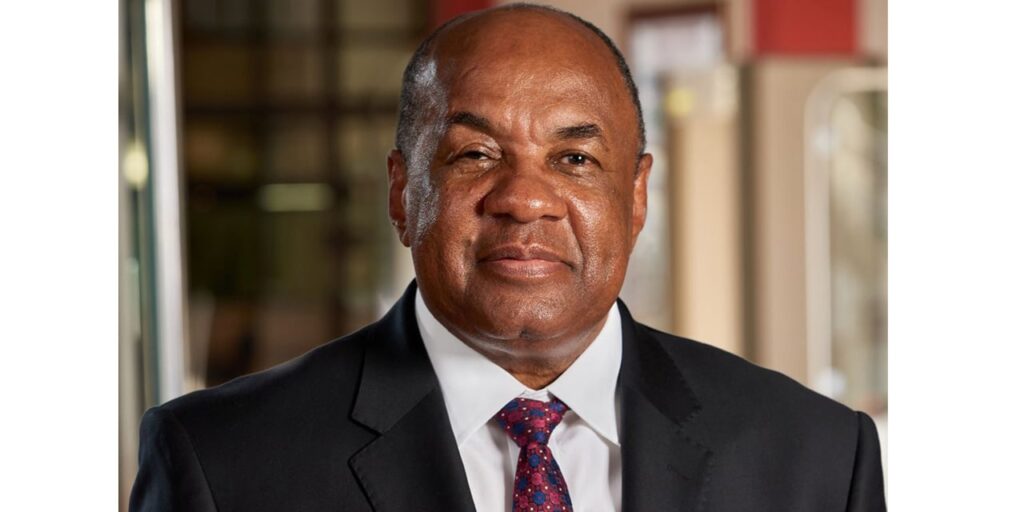
“The MPC also noted that the domestic economy, while growing at a moderate pace, was operating below full capacity, with private sector credit extension remaining subdued. This suggested that further support to the domestic economy is warranted. With the latest projections indicating a lower and well-contained trajectory for inflation over the medium term, and with international reserves at a level deemed robust, the committee unanimously decided to reduce the Repo rate by 25 basis points to 7.25 percent per annum, effective immediately. Concurrently, commercial banks are expected to reduce their prime lending rate by the same magnitude to 11.00 percent,” !Gawaxab said.
He added that in deciding on this policy stance, the committee was wary of the renewed widening of the policy rate differential with the anchor country, South Africa, but was comforted by Namibia’s recent experience of orderly capital flows along with adequate levels of international reserves. The South African Reserve Bank cut interest rates by 25 basis points in September 2024, saying it continued to see a dip in headline inflation in the near term, supported by a stronger rand, leaving the country’s benchmark repo rate at 8%.
!Gawaxab said that the newly developed repo rate policy stance in Namibia will continue to safeguard the one-to-one link between the Namibia Dollar and the South African Rand, while supporting domestic economic activity.
Giving a broad analysis of the economy, !Gawaxab said that domestic economic activity rose during the first eight months of 2024 relative to the same period in 2023. “The recovery was broad-based, with notable increases in the mining, electricity generation, wholesale and retail trade, tourism, financial services, communication, and transport sectors, as well as the livestock marketing subsector. The pace of expansion nevertheless lost momentum. In this regard, the Namibian economy recorded a slower growth rate of 3.5% during the second quarter of 2024, compared to 4.3% and 3.6% in the preceding quarter and the corresponding quarter of 2023, respectively. Looking ahead, growth is projected to moderate to 3.1% in 2024 and 3.9% in 2025, compared to a firmer pace of 4.2% recorded in 2023. The anticipated slowdown is primarily attributed to the weakening primary industry, partly reflecting the prevailing drought conditions and sluggish global demand,” the Governor explained.
External risks include the escalation of geopolitical tensions, especially in the Middle East, geo-economic fragmentation, and weaker global demand. Internally, water supply interruptions, particularly at the coastal towns, continue to pose risks.