


Staff Reporter
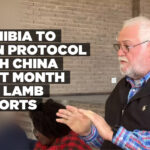
NEXT month, Namibia will sign a protocol with China to open the Chinese market to Namibian lamb.
This announcement was made by the Minister of Agriculture, Water and Land Reform, Calle Schlettwein, during a community engagement in Leonardville this week. He explained that Namibia aims to apply the same strategy with lamb as it did with beef to secure access to lucrative markets such as the United States and China.
Schlettwein emphasised that while the country excels in meat quality, the ongoing drought poses a significant threat to Namibia’s ambitions to access and provide a reliable meat supply to certain markets.
“We are top quality because we are free-ranging, we are not hormone- and antibiotic-treated. The farmers, we are doing very well on the quality side. So, the news is better. It’s just that the drought has captured us,” Schlettwein said.
The minister therefore stressed the urgent need to invest in Namibia’s agriculture sector to build resilience against drought.
“Markets want a reliable supply all the time, not a lot this year and nothing next year. They will pull you out, and therefore a problem that we have to address in the agriculture sector is resilience against drought. We have none; absolutely none. The last drought is an example of this. When the last drought came, we lost half of our cattle herd and almost three-quarters of our sheep herd – just gone, died – because we have no resilience. We can’t save them. We have no financial backup. We have got no insurance,” Schlettwein said.
According to him, building a drought-resilient agriculture sector is only possible with substantial financial investment, including private investments. He emphasised that this is crucial, given that agriculture is considered the mainstay of the economy.
“We are under-investing in the sector, and therefore we are eroding resilience; we are eroding productive capacity,” the minister warned.
Schlettwein also highlighted farm diversification as another strategy to enhance drought resilience. He explained that diversified farming practices can help bridge the challenges of dryland farming, especially given the country’s unreliable rainfall.
“Rain is becoming less reliable in the future. That’s what climate change is all about. So, we have to build into our farming practices areas that help us protect ourselves against drought. I am very much aware that not every farm has the potential to do crop production, but that is where we can use subsidies quite efficiently so that we can give at least some assistance to those farmers who cannot produce,” Schlettwein added.


