



Business Reporter
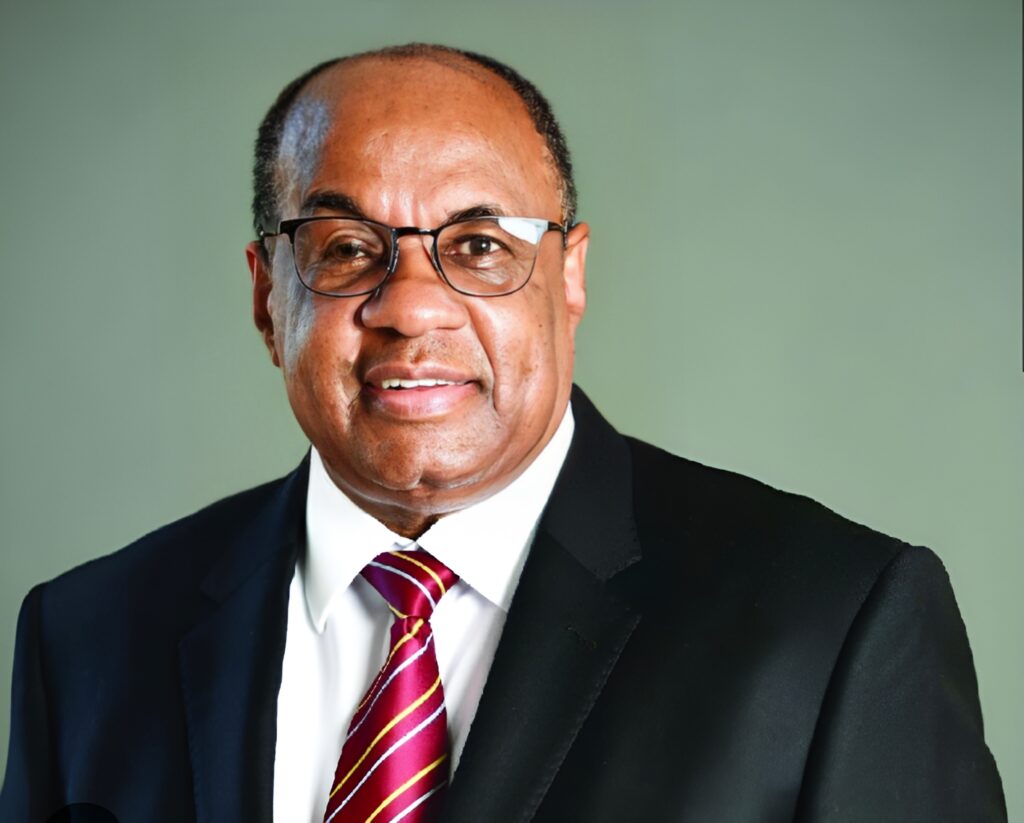
THE Monetary Policy Committee (MPC) of the Bank of Namibia has announced that the repo rate will remain unchanged at 7.75%, thus keeping the prime lending rate steady at 11.50% and offering relief to consumers on various payments such as mortgages and vehicle loans. This decision was communicated by the governor of the Bank of Namibia, Johannes !Gawaxab, who explained that most monitored central banks kept their policy rates unchanged at their most recent monetary policy meetings, partly due to easing inflation and weakening growth.
“The exceptions were the Bank of Russia and the Central Bank of Brazil, which raised and cut rates, respectively, since the last MPC meeting. Generally, global policy rates remained restrictive amid signs of having peaked. Against this background, the MPC decided to keep the repo rate unchanged at 7.75%. As such, the prime lending rate remains steady at 11.50%. The MPC noted the most recent short-term acceleration in inflation. However, with real interest rates already positive, continued signs of slack in the economy, slow credit growth, a projected slowdown in inflation in 2024, and a fair level of international reserves, the MPC decided to maintain the repo rate at its current level. This policy stance will continue to safeguard the one-to-one link between the Namibia Dollar and the South African Rand and support domestic economic activity,” !Gawaxab said.
He added that domestic economic activity expanded further during the first ten months of 2023, although at a slower pace compared to the same period in 2022. !Gawaxab said that the improvement was observed across most sectors, particularly mining, electricity generation, livestock agriculture, wholesale and retail trade, tourism, communication, and transport. He shared that activity in the construction sector, however, remained weak. For the year 2023, GDP growth is estimated to decline to 3.9% from 7.6% in 2022, largely on account of slower growth in the primary industry, following the high base set in this industry during 2022. The central bank governor added that growth is expected to slow further to 3.4% in 2024.
!Gawaxab said that risks to the domestic economic outlook remained broadly unchanged since the previous MPC meeting, mainly driven by external factors. “Such external factors are the weakening global economic growth, tighter global monetary policy, geopolitical tensions, geoeconomic fragmentation, and the fallout of load-shedding in South Africa. Internal risks include the current drought, uncertain rainfall conditions, and water supply interruptions, particularly at the coastal towns.” he explained.
As of 30th November 2023, the stock of international reserves stood lower at N$49.0 billion, compared to N$51.4 billion recorded at the end of October 2023, predominantly on account of higher net commercial bank outflows. At this level, !Gawaxab said that the stock of international reserves is estimated to cover 5.1 months of imports, thereby remaining sufficient to support the currency peg between the Namibia Dollar and the South African Rand while meeting the country’s international financial obligations.


