


Business Reporter
THE Stampriet Aquifer Uranium Mining Association (SAUMA) has warned that the proposed In situ leaching (ISL) uranium mining, proposed by Headspring Investments, a Russian company, will pose a risk to around 7,000 boreholes which feed into the Stampriet aquifer, contaminating them with the mining solution used to mine that dissolves uranium and other toxic radioactive minerals into the groundwater.
This was expressed by Geologist, Dr. Roy Miller, who addressed the Parliamentary Standing Committees on natural resources which made a visit to Leonardville, where Headspring Investments (Uranium One’s) proposed ISL Uranium mine is situated.
Chairperson of the Parliamentary standing committee, Tjikero Tweya explained that the community in the area has expressed themselves on the proposed mining, with some in support of it while others are not. “It is not for the government simply and to unilaterally take sides, and say we believe you. The truth of the matter is that this is an exploration phase project which aims to find out if the mineral is present and the quantity and quality of it. After finding all this out, the company can apply for a mining licence. At this moment, the company has just done the exploration halfway. It was stopped from proceeding,” Tweya said.
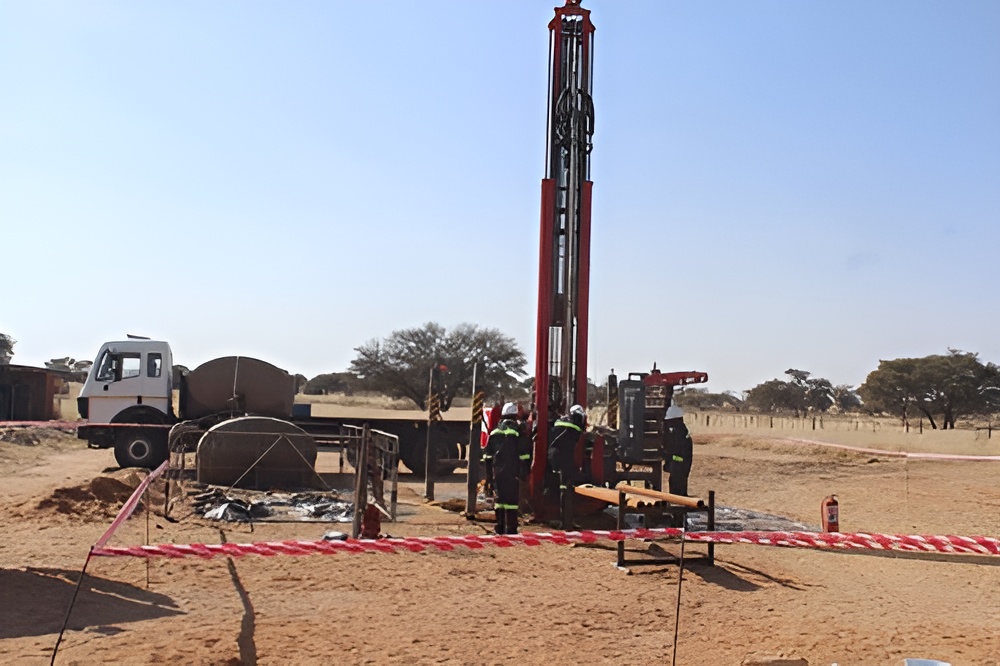
The drilling permit applications made by Uranium One were denied by the Minister of Agriculture, Water and Land Reform, after it raised environmental concerns. The Uranium One company, which is a local branch of Russia’s state-owned atomic energy agency, Rosatom, has since sought legal recourse to overturn the decision.
Dr. Miller said that there is a high risk of the mining solution entering the drinking water, due to the high usage of the aquifer’s water, with irrigation boreholes pumping at 20,000 to 100,000 litres per hour.
“When mining stops the ground still consists of high and unsafe concentrations of uranium in the ground which can be ejected into the aquifer. There is a high possibility of cross-contamination to other aquifers. There are 7,000 water boreholes in the Stampriet Artesian Basin (SAB), each pumping 0.1 up to 300 cubic meters per hour,” Dr. Miller said.
He added that problems associated with In situ leaching (ISL) are that the mining solution dissolves uranium and other radioactive minerals, and toxic heavy metals. Dr. Miller said that it also adds sulphates to the water. “Leakage to other aquifers should be prevented as mentioned in numerous studies. About 70% of boreholes in Stampriet leak,” Dr. Miller said.
He added that in the drilling water, contamination does leak away from the mining area, and cross-contamination is highly likely, also highlighting that Radioactivity is an active danger which can cause cancer and affect multiple organs in the body.
The geologist also stressed that according to World Health Organization guidelines, a safe amount of uranium in drinking water is 30 micrograms per cubic meter, however added that the Uranium in the proposed mining solution is a thousand times above the WHO guidelines. “At the end of mining, it is 333 times above the WHO guidelines and still underground in our drinking water,” Dr. Miller warned.
Approached for commentary on the status on the drilling permits which were denied by the agriculture ministry, Jona Musheko spokesperson of the agriculture ministry said that the issue is still under consideration.


