Staff Reporter
THE Minister of Agriculture, Water, and Land Reform, Calle Schlettwein, has expressed concern about the country’s water supply situation, calling it a serious challenge exacerbated by the nation’s unpredictable and variable rainfall patterns.
“The overarching issue of water supply is of significant concern across many regions of the country, whereby many rain-fed water catchments have limited water while some have completely dried up,” the minister revealed.
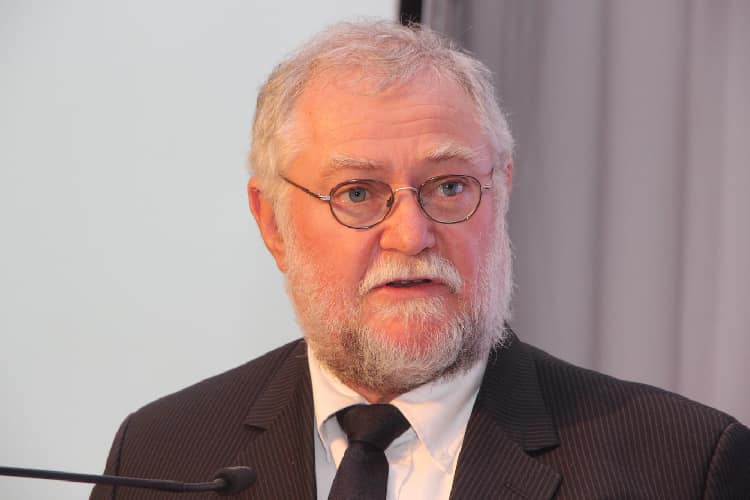
He made these remarks during the recent commemoration of World Food Day in Kayova Village, Ndiyona Constituency, Kavango East Region. This year, the day was commemorated with the theme “Water is life, water is food. Leave no one behind.”
“This theme highlights the importance of water globally, as a driving force for people, economies, nature and the foundation of our food; and also, to enhance our understanding about the wise use, and sustainable management of this valuable resource. The demand for water in the world and particularly for Namibia, has been increasing and will continue to do so over the coming decades due to population growth, socio-economic development, and the demand for food production,” Schlettwein explained.
The minister further emphasized that Namibia is highly vulnerable to the effects of climate change, naturally inclined to experience droughts and floods, and is grappling with growing pressure on its freshwater resources. As a result, he added, the country is at risk of depleting its water resources.
Schlettwein stressed that water supply security is crucial for ensuring food security in the country. He added that the country’s agricultural sector consumes about 75% of the country’s water, with the commercial agricultural sector being the largest consumer and communal farmers being heavily reliant on rain.
“We therefore need to rededicate our efforts towards safeguarding our water resources, exploring non-conventional water sources such as water reuse, sea water desalination, rainwater harvesting; implement water conservation and demand management measures, promoting water use efficiency in our houses, offices, schools, irrigation schemes, industries and across all sectors,” he said.
According to him, the government, through his ministry, has consistently prioritized water supply security by providing potable water in rural communal areas. To illustrate these efforts, he revealed that 21 boreholes were drilled, and three boreholes were rehabilitated in the Kavango East region during the 2022/2023 Financial Year (FY) to ensure a stable water supply for the local population. Furthermore, he added that 18 boreholes with water point infrastructure were installed between May and June 2023, and two short pipelines were also constructed in the Rundu rural constituency and Mashare constituencies during the 2022/2023 FY.
“In addition, the Government is in the process of installing two mini desalination plants in Mashare constituency at Mukuni-Shighuru and Vikota water points, to ensure reliable potable water to the rural communities,” Schlettwein added.