


Staff Reporter
THE third Ministerial Session of the Namibia-South Africa Bi-National Commission, which saw hundreds of Namibian and South African ministers and high-level government officials converge, will unpack the Orange River boundary issue between the two countries and further merge power relations between the two countries’ state-owned power companies to bring about industrialization to both states.
This was shared by the Deputy Minister and Minister of International Relations, Netumbo Nande-Ndaitwah, who co-chaired the opening of the BNC.
The Bi-National Commission (BNC) will see the two countries discuss issues of mutual interest and implement decisions made during previous bilateral talks.

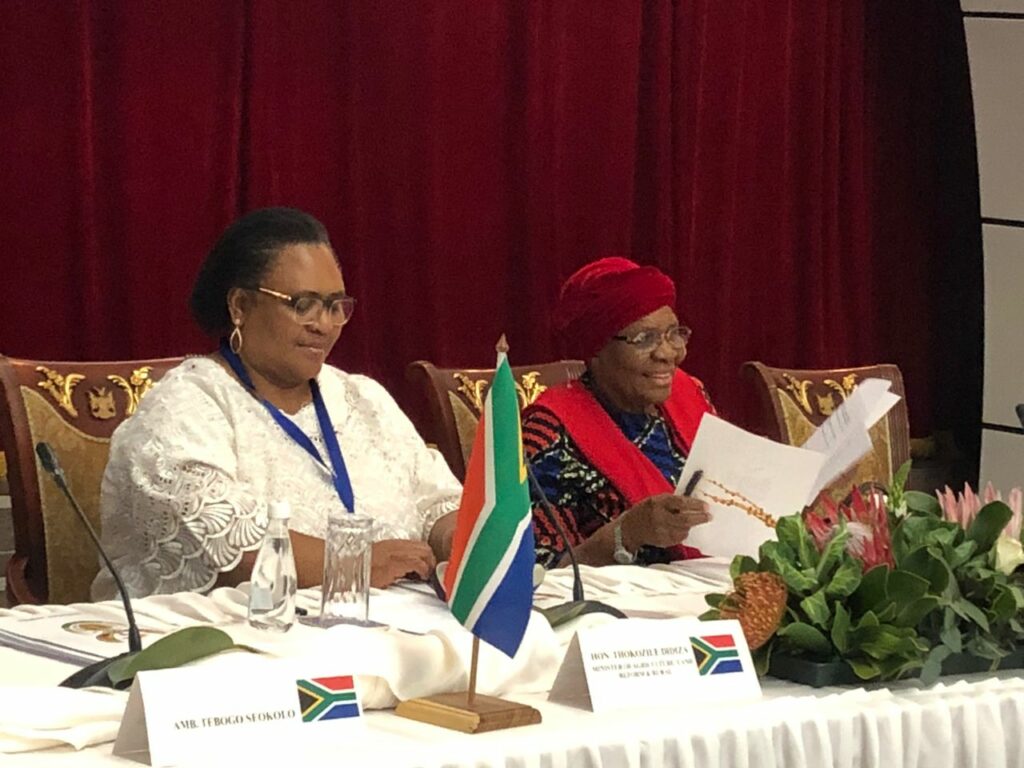

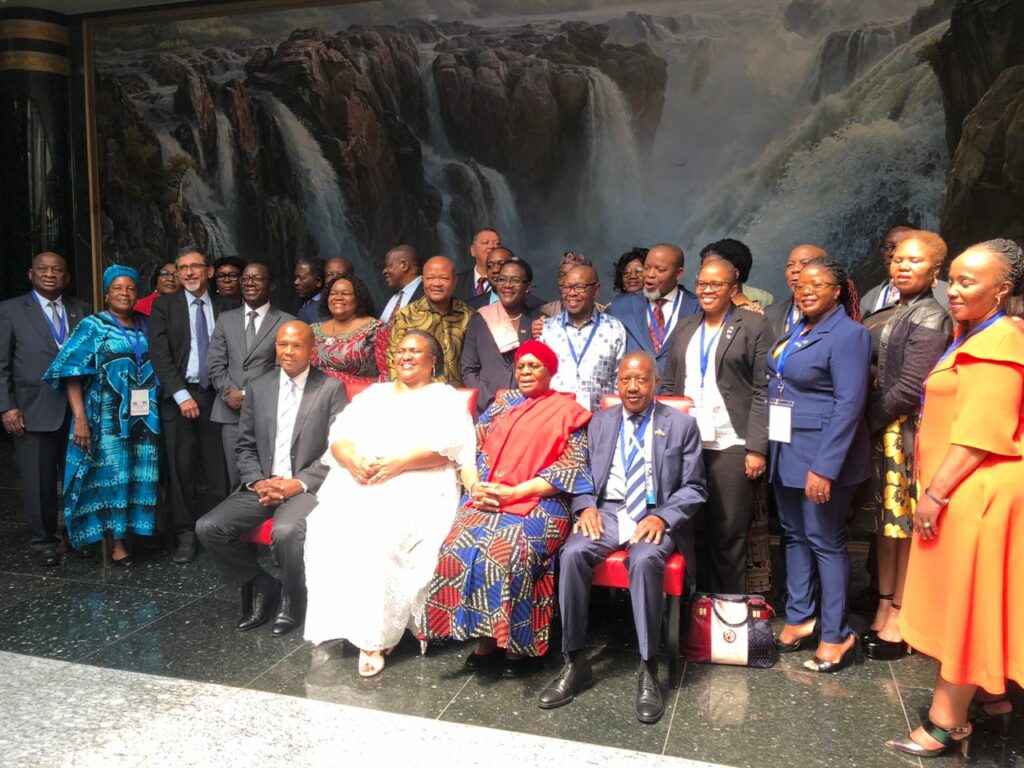
Nande-Ndaitwah said that the BNC’s agenda covers a wide range of sectors such as trade, investment, energy, health, education, and security, among others. “These discussions will help us identify areas where we can deepen our collaboration, share experiences, and leverage our respective strengths for the betterment of our societies,” the Minister said. She further highlighted that one important outstanding issue between South Africa and Namibia is the question of the Orange River Boundary between Namibia and South Africa, and it is a fervent hope that this issue is comprehensively dealt with during the opening session to enable the two countries to complete the process that was started in 1993.
Further to this, Nande-Ndaitwah said that the two countries need to collaborate on issues of energy to achieve industrialization.
“Namibia recently discovered oil off the coast of Namibia. This finding is commercially viable, and together with joint venture partners, Namibia is in the process of ascertaining the volume of the resources and establishing whether it is of commercial value or not. Namibia is at an advanced stage of developing a local content policy for maximum benefit. In this regard, we are engaging oil-producing countries on the continent and beyond to learn from their best practices. Both Namibia and South Africa subscribe to the AU Agenda 2063, which calls for industrialized Africa. However, without energy, industrialization cannot take place. I, therefore, urge NamPower and Eskom to strengthen existing cooperation on power supply, interconnectivity, and available opportunities,” Nande-Ndaitwah said. She added that, among other things, there is scope for further discussions on the Kudu Gas project, and NamPower and Eskom should have further engagements. “In that vein, I am happy to note that the MoU in the Field of Energy will be part of our discussions during this session,” Nande-Ndaitwah said.
The Minister further mentioned that the legal teams from MIRCO and DIRCO conducted a joint audit in Pretoria on 2-4 October 2023, of all the 131 bilateral instruments entered into between Namibia and South Africa since 1990. Following that exercise, Nande-Ndaitwah said that some instruments have been fully implemented, and there are now 75 legal instruments between the two countries that are in force.
“I urge the two countries to expedite their implementation and, where necessary, to review them to address the needs of our people. Updating these instruments as appropriate will go a long way towards creating a more favourable environment for strengthening economic cooperation and bilateral trade,” she said.
She added that the 3rd BNC Session is also taking place against the backdrop of a global economic and financial crisis coupled with the effects of climate change, the ongoing Russian-Ukraine War, lasting effects of the COVID-19 Pandemic, as well as economic hardships, all of which have had a devastating effect on both our countries. “Those external factors have placed obstacles in the way of our desire to improve the general well-being of our peoples. These challenges require us to work together, finding innovative solutions and strategies to address them effectively,” Nande-Ndaitwah concluded.


