


Business Reporter
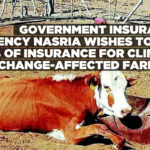
THE Namibia Special Risks Insurance Association (NASRIA), which was declared a Public Enterprise in 2019, is in discussions with the government, the World Bank, and global climate change financing initiatives such as COP26 to subsidize 80% of livestock insurance on behalf of Namibian farmers. This initiative aims to ensure that they do not lose their livestock due to climate change conditions, such as recurring droughts and floods.
According to the Ministry of Agriculture, over 60,000 livestock were lost by farmers in 2019 during what was termed the worst drought the country experienced.
The initiative to insure farmers was revealed by Ndapona Schleberger, the marketing executive at NASRIA, who invited the media to reveal the new brand logo of NASRIA as the agency embarks on a new era of special risks insurance.

Explaining some of the products covered by NASRIA, Schleberger said that under the Namibia Agriculture Insurance scheme, NASRIA offers Weather Index-Based Livestock insurance, which will be launched soon. “This is an agricultural insurance scheme. We aim to bring communal farmers into the mainstream. Some communal farmers do not have access to loans due to a lack of collateral to offer. However, once the livestock is insured, they can use their livestock as collateral to obtain loans. The weather index-based agricultural insurance is available for both communal and commercial farmers,” Schleberger explained.
She further said that this insurance is based on weather-based reports. “We use data from the weather bureau complemented by satellite data, which determines whether the farmers experienced a normal rainy season or will face drought or flooding. We use this weather data to compensate farmers for insuring against these natural conditions. Our goal is to ensure farmers do not lose any of their livestock. We encourage you to purchase fodder and ensure your livestock does not perish due to drought. It involves a one-off premium payment,” Schleberger said.
Providing background information on the relatively unknown public enterprise that is NASRIA, Schleberger explained that NASRIA was established before independence to cover insurance for special risks, such as damage to property caused by terrorism and strikes. It was converted into a Public Enterprise in 2019.
“NASRIA was established before independence when the party currently governing the country was labeled as a terrorist organization. There were significant events during that time, including the bombing of Gustav Voights Centre, the bombing of the butchery in Walvis Bay, and the Standard Bank bombing. There were labour disputes, with unions and student movements rising against the apartheid regime. The insurance companies in that era stated that they could no longer cover claims of that nature. They came together and formed an association, a fund, which was handed over to the interim government,” she explained.
Schleberger added that NASRIA provides cover for damage to property and consequential loss due to riots, civil commotion, strikes, labour disturbances, acts to overthrow or influence the government or any local authority by force, or means of fear, terrorism, violence, and acts with political objectives.
“What it means is that today, we have one or two activists who are very much involved in what is termed special risks activities. For example, the case of Amushelelo, where City of Windhoek temporary workers destroyed property, is one of the disturbances covered under NASRIA. It is important for businesses to have NASRIA coverage in today’s world, with all the activities happening. Many individuals are standing up and striking because they are aware of their rights. NASRIA is not a standalone insurance but a complementary insurance cover alongside other insurance policies. It can cost up to N$45 per annum to insure your house or car,” Schleberger said.
She further clarified that NASRIA does not compete with the private sector but only covers special risks insurance that other conventional insurance agencies do not provide.


