Staff Reporter
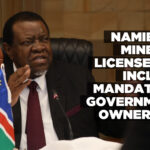
PRESIDENT Hage Geingob said that the government is in the process of amending Namibian legislation to allow for a certain percentage of mandatory government ownership in all mineral licenses.
This decision, he explained, was inspired by public calls for greater participation in the ownership of Green Hydrogen and hydrocarbon ventures. The president made these remarks during the opening of the Mining Expo and Conference, held under the theme “Namibia’s role in the sustainable supply of minerals to support the global energy transition.”
Apart from amending the country’s laws to ensure a specific percentage of compulsory government ownership of mineral licenses, President Geingob also emphasized that Namibia will only engage with stakeholders who align with the country’s objective of enhancing local value addition to its minerals. This, he clarified, involves the production of refined goods intended for export.
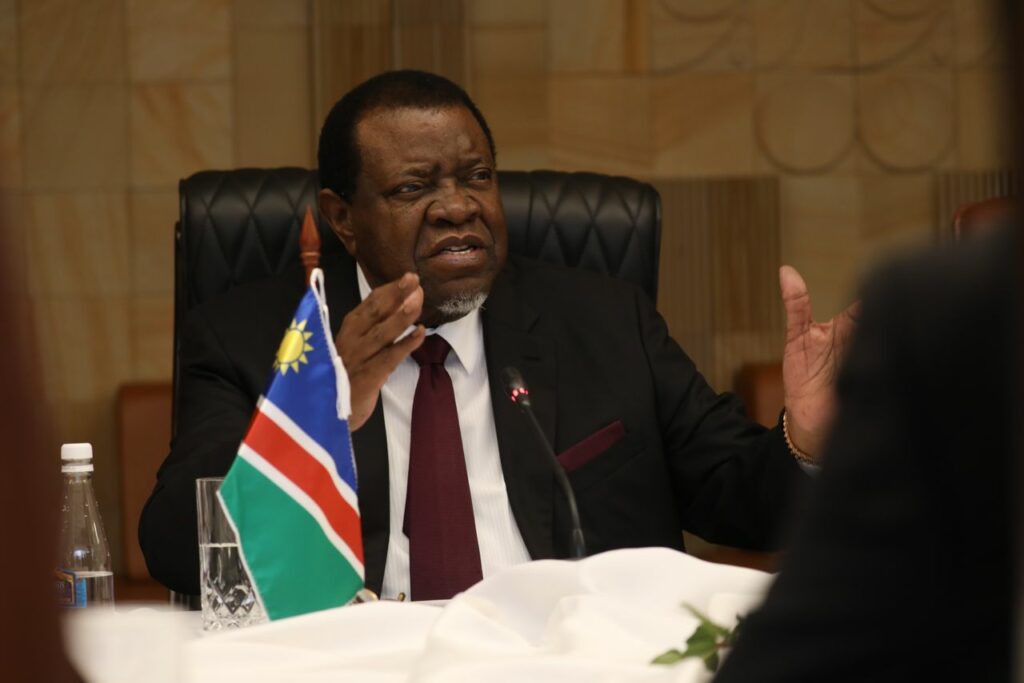
He highlighted that Namibia has recognized that when countries export their raw materials at reduced costs only to reacquire the refined goods at elevated prices, they encounter limitations in advancing their economies to the degree necessary for achieving prosperity and development among citizens.
“To give head to this call, Cabinet in addition to the Minerals Beneficiation Strategy which was launched in 2021, recently imposed a ban on the export of unprocessed crushed lithium ore, cobalt, manganese, graphite, and rare earth minerals in order to ensure local beneficiation,” he said.
According to him, this move is expected to stimulate investments in the establishment of domestic processing infrastructures through private entities or private-public partnerships.
“It is for this reason that the Namibian Government continue to seek strategic partnerships towards the realization of this initiative. Therefore, we say yes, Namibia is open for business, as can be seen in our progressive policies, regulatory frameworks, developed infrastructure and political stability, for investors to come and invest in our mineral sector. However, such investments must take place on our terms of local value addition,” he said.
The President underscored the significance of this strategy by emphasizing that Namibia’s green hydrogen projects hold the potential to revitalize the country’s long-held ambitions of local mineral beneficiation and value addition. This endeavour, he added, not only promises to secure essential energy sources but also lays the foundation for sustainable economic and social development.
Similarly, he said that the discovery of large oil reserves in the Orange Basin and the progress of the gas sector as transitional energy sources are poised to bring about profound transformations in both Namibia’s economic landscape and the socio-economic conditions of its citizens.
However, he cautioned that achieving these ambitions requires accelerated efforts in implementing strategies to speed up the realization of these opportunities. This, he said, is crucial to ensuring that Namibian citizens, especially the youth, can see their aspirations for jobs and personal fulfilment come to fruition during their lifetime.
“In this regard, I call on and encourage the responsible Government Ministries and Departments, the mining industry, private sector, Development Banks, and partners to get the processes rolling as soon as possible and as fast as possible,” the president said.