Ashley Nyambe
THE emergence of the synthetic diamond industry poses a significant threat to natural diamond-producing countries like Namibia, as these lab-grown diamonds could potentially capture the market that natural diamond-producing countries traditionally cater to.
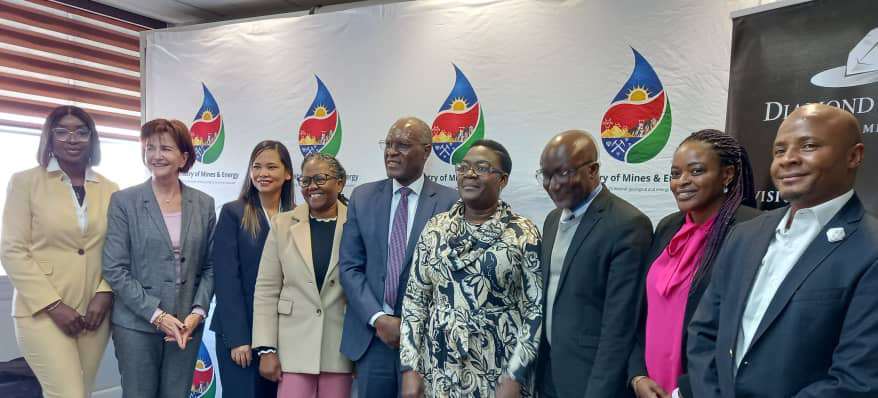
This is according to Tom Alweendo, the Minister of Mines and Energy, who highlighted it as one of the main challenges that the diamond industry might soon face. He made these remarks during the introduction of the newly-appointed Diamond Board of Namibia, which he tasked with determining how to address this challenge.
“If, for some reason, synthetic diamonds start to really capture the market that we, as natural diamond-producing countries, sell to, it will mean that we are going to lose that market. And, therefore, the challenge you then have is to say, how do you then deal with this, and that’s the part where the board comes in, especially to keep an eye on this,” the minister said.
He explained that the production of synthetic diamonds cannot be stopped as it is a legal product with great market appeal. Synthetic diamonds are particularly appealing because their production cost is much lower than that of natural diamonds, which is why they are also cheaper. However, Alweendo emphasized the importance of clearly distinguishing between synthetic and natural diamonds to prevent synthetic diamonds from being sold as natural.
“It’s a legal product, but yet we also know that if that then captures the market that we use to sell, then we actually going to, at some point, not have the market to sell diamonds anymore. The strategy has been to say, since we cannot stop the production of synthetic diamonds, the only thing you can do is to insist that those who are producing those lab diamonds should not be allowed to sell them as natural diamonds because they are not natural diamonds,” Alweendo said.
The minister, therefore, called on the newly-appointed Diamond Board of Namibia to consider how to create an environment where people can differentiate between synthetic and natural diamonds.
The minister explained that the Diamond Board cannot make decisions, but they can advise the minister on matters related to the diamond industry — an important task, as the diamond industry plays a crucial role in the country’s economy.
“In terms of our total exports that come from the mining industry as a whole, more than 50% of that export value comes from the diamond industry. In 2022, the total revenue that went to the treasury from the mining sector as a total, 55% of that came from the diamond sector only. So that is really an indication that the diamond sector is a very, very important sector of our economy and, therefore, we need to deal with it with due care. The Diamond Board has got a role to play in how we then manage this industry that is so important, making sure that it continues to be managed for the best interest of the country,” Alweendo said.
The Diamond Board consists of 12 members who will serve for a period of three years. The members of the board are Erasmus Shivolo (Chairperson), Maenge Shipiki Kali (Deputy Chairperson), Festus Nghifenwa, Pauline Thomas, Wollen Zuleika Nell, Benita Herma, Brent Eiseb, Nekulilo Ithete, Barthlomeus de Klerk, Emily Kapulwa, Desley Somseb, and Isabella Chirchir.