


Staff Reporter
ALTHOUGH the rainfall season started off well in some parts of the country, some regions experienced below average rainfall, which worsened as the months progressed.
This is according to the Ministry of Agriculture, Water and Land Reform’s recent Crop Prospects and Food Security Situation Report, which revealed that – with the exception of the north-eastern regions – most parts of the country were dominated with poor rainfall performance and prolonged dry spells during the 2022/2023 rainfall season.
According to the report, some northern regions experienced above average rainfall in January. These regions include the Kunene, Omusati, Oshana, Ohangwena, Oshikoto, Kavango East, Kavango West and Zambezi regions.
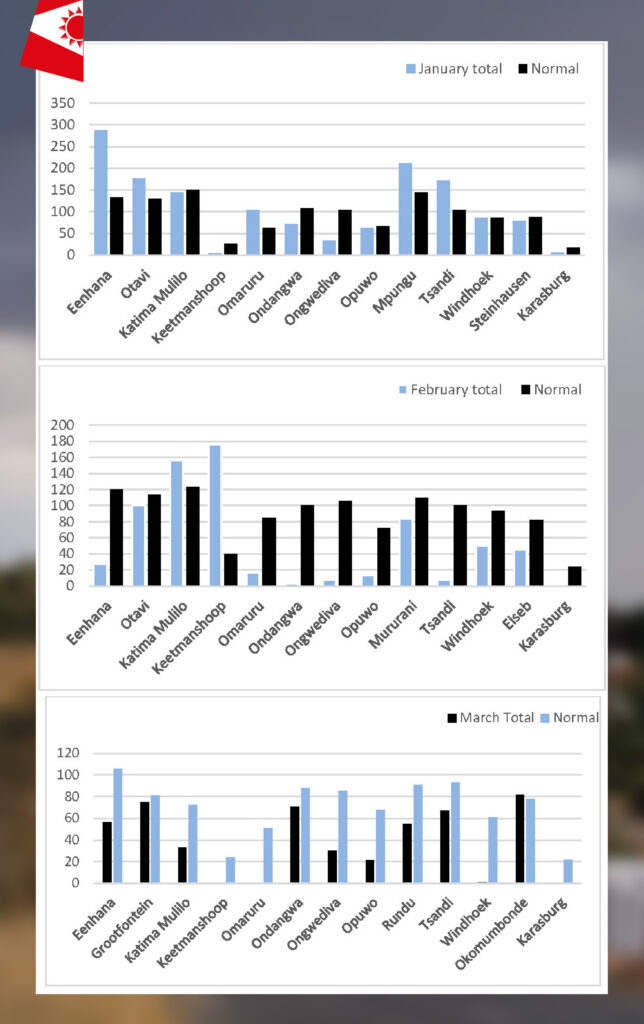
While the year started with above average rainfall for the aforementioned regions, other areas experienced below average rainfall in January. These areas are the //Kharas, Hardap, Erongo, western Kunene and Omaheke regions.
The country’s rainfall performance worsened in February, with about ten regions receiving very low to no rainfall during this month. The Kunene, Omusati, Ohangwena, Oshana, Oshikoto, Khomas, Omaheke, Erongo, Hardap and //Kharas regions were impacted by this.
March saw a further decline in the amount of rain across the country. However, a few areas were spared from this fate.
According to the ministry, the western and southern regions experienced low levels of rainfall in March, while the eastern regions experienced high rainfall. The Omusati (southern part), Oshana, Kunene, Hardap and //Kharas regions also experienced below normal rainfall in March.
“The month of March has been dry for the bulk of the country and only isolated showers were received in some parts of the country,” the report added.


