Staff Reporter
WHILE some parts of the country continue to receive significant amounts of rain, most parts have been relatively rain-free – and this persistent dry spell could result in crop failures.
This was recently highlighted in the Hydrological Services of Namibia’s flood and drought bulletin, which revealed that the country’s seasonal rainfall performance was normal to below normal, especially during February. The bulletin added that the current dry spell that persists in most parts of the country could therefore lead to crop stress and, ultimately, crop failure as some farmers have no possibility of replanting.
“Due to the poor performance of the rain during February, the seasonal rainfall categorization dropped by one level, either from above to normal or from normal to below over most of the country,” the Hydrological Services of Namibia added.
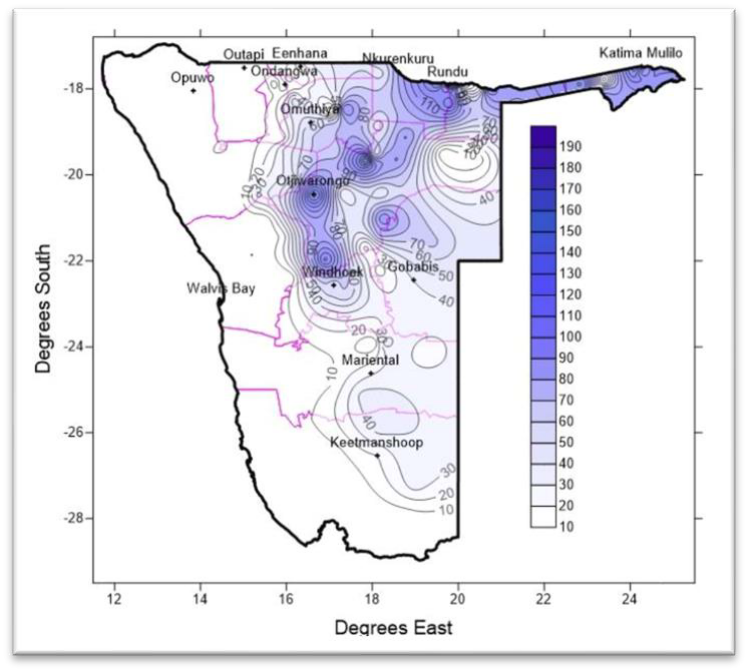
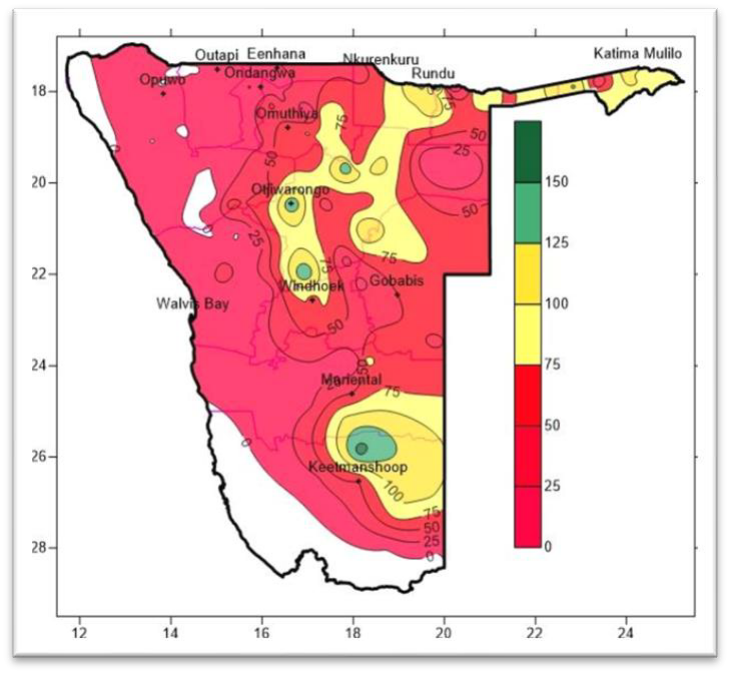
However, while the rain has been scarce in most parts of the country, some areas continue to receive considerable amounts of rain, albeit sporadically. In fact, Namibia Meteorological Services’ rainfall bulletin revealed that some northern towns recorded more than 40 millimetres (mm) of rain between Wednesday and Thursday morning alone.
These places include Ohangwena Region’s Oshikango and Oshikoto Region’s King Kauluma Village, which recorded 48,6mm and 43mm of rain respectively between Wednesday and Thursday morning.
Many other northern towns also received some rain during the same period. This includes Oshakati, in the Oshana Region, Rundu, in the Kavango East Region, and Okalongo, in the Omusati Region, which recorded 31,4mm, 11mm and 10,5mm of rain respectively between Wednesday and Thursday morning.
While Wednesday’s rain was not widespread across the country, it was also not limited to the northern areas only. For example, Namibia Meteorological Services’ rainfall bulletins indicate that several places in the Otjozondjupa Region received substantial rainfall as well. These places include Grootfontein, Otjiwarongo and Otavi, which recorded 25,4mm, 20,2mm and 19,5mm of rain respectively between Wednesday and Thursday morning.
The rest of this month is also expected to come with more rain. This was revealed by the Hydrological Services of Namibia’s latest flood and drought bulletin, which indicates that the expected rain will be particularly concentrated on the northern, central and eastern parts of the country. Light showers are also expected in the far South at some point during the month.