


Staff Reporter
THE Russian Embassy in Namibia has clarified Russia’s position on the Russia-Ukraine conflict. Full press release: https://tinyurl.com/2bzu6adw
Alexey Drobinin, a director of foreign Policy Planning in Russia’s foreign Ministry said that common future for all will require a dialogue between the West and “new centres of a multipolar international order”.
Drobinin made these remarks while reflecting on the prospects for the development of international relations which were discussed at a meeting of the Valdai International Discussion Club in October 2022, where President Vladimir Putin of Russia pointed out a few key issues of concern with regard to international peace and security.
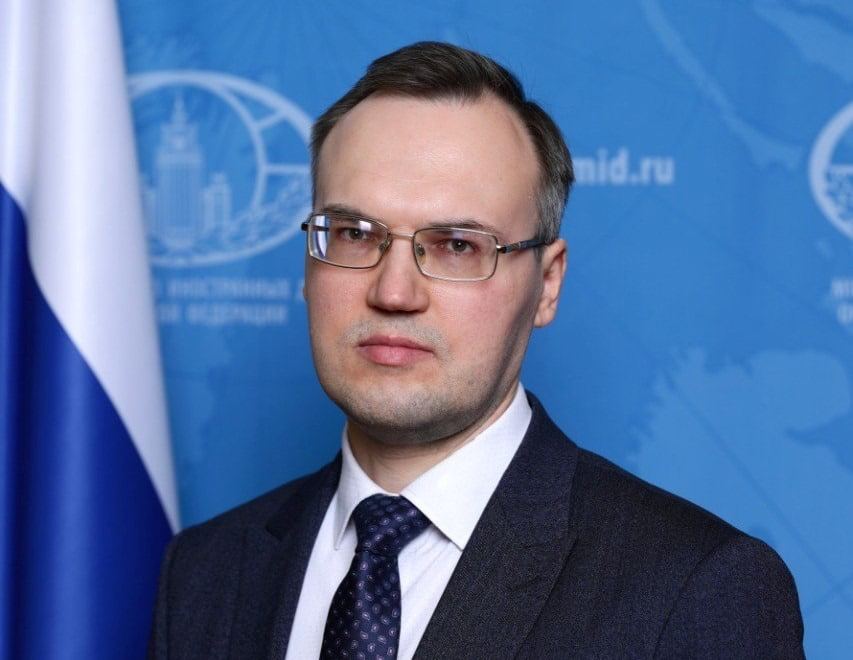
In a press statement released by the Embassy of the Russian Federation in the Republic of Namibia, Drobinin said that defining these issues in such a way, will set a conceptual framework necessary to analyze current global trends.
“This overarching trend outlined by President Putin is not left unheeded by Russian political scientists. Here is one such opinion: “The worldwide meaning of the Ukraine crisis is about returning freedom, dignity and independence to the non-West – we suggest calling it the World Majority which previously used to be suppressed, robbed and culturally humiliated. Obviously, it should get back its fair share of global wealth” Drobinin added.
He added that the civilizational approach is just one of a number of possible ways to describe the world, citing that at the current crucial stage this approach provides the most precise “entry point” for the accurate interpretation of processes related to the transformation of the world order.
Drobinin noted that civilizational commonwealths need not be, and indeed cannot be equal in their economic and military might, territorial scope or population numbers, and that the World Majority will do so by combining capabilities and constructive work, while the West will do so by setting itself in opposition to the rest of the world.
“The civilizational factor in international affairs is a hallmark of time. As we live through the transition to a new historic era, the ever-ongoing struggle of ideas and notions about the future intensifies. But this collision takes place neither in an abstract world, nor, or in a power vacuum. Its frame is defined by the geopolitical and civilizational vision of a multipolar world, which is being born today” He concluded.


