


Staff Reporter
THE country’s dire economic situation was worsened by the Covid-19 pandemic, which resulted in a drastic increase in unemployment and caused skills shortages in the country.
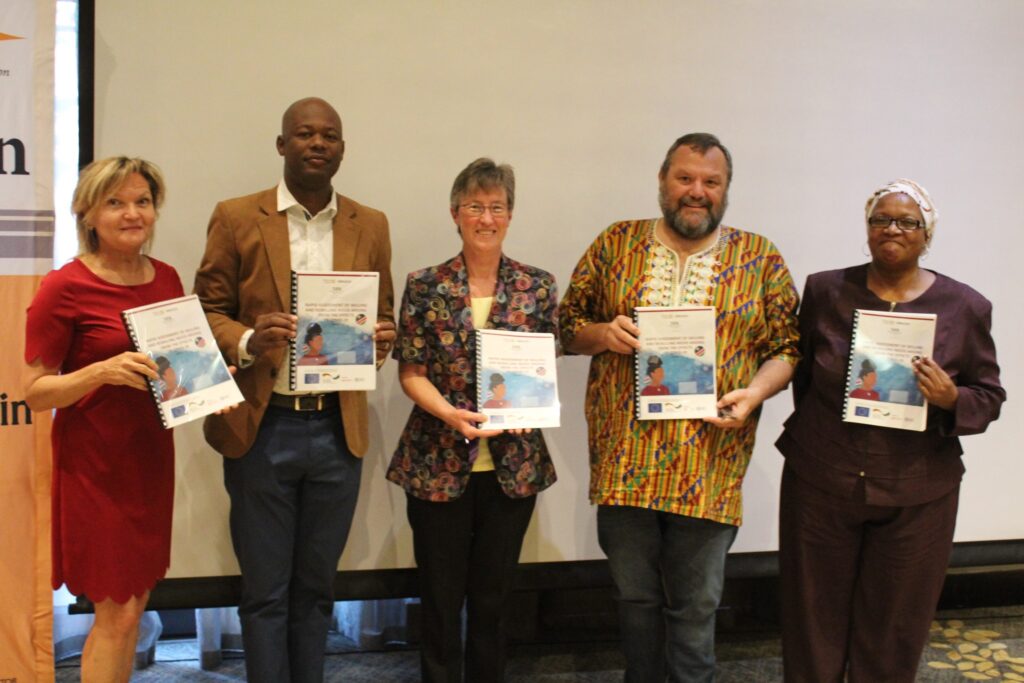
This was revealed by a survey report entitled “Rapid assessment of reskilling and upskilling needs arising from the effects of the Covid-19 crisis: Namibia”. The recent launch of the report was organised by the Namibia Employers’ Federation (NEF) and the Skills Initiative for Africa (SIFA), a programme of the African Union Commission (AUC). The assessment was also undertaken by SIFA and the International Labour Organization (ILO).
According to the Chief Technical Adviser of SIFA, Naomy Kanyemba Lintini, the survey aimed to identify the skills shortages caused by the pandemic and highlight effective reskilling and upskilling measures required to mitigate the impact of the pandemic.
The report indicated that the pandemic resulted in unemployment doubling amongst the sampled individuals, going from 30% in 2019 to 63% in 2021.
The number of employed individuals dropped from 35% in 2019 to 19% in 2021. Of the 19%, the report revealed that 63% represent men and 37% represent women. This is likely a result of widespread retrenchments as many companies were forced to reduce their workforce due to the pandemic.
“This reduction in staff means that businesses have shrunk in size, which not only will affect their capacity to recover, but will also have possible implications for the speed of recovery,” the report read.
The report made it clear that the pandemic’s effect was widespread. However, it indicated that while employment remained stable for companies with more than 250 employees, the biggest changes in employment occurred in companies with less than 100 employees, with the smallest enterprises most affected.
The survey found that the proportion of businesses that employ between 25 and 99 staff members decreased by 6% and those who employ between 100 and 249 employees decreased by 5%.
The report emphasised that Namibia was already in a dire economic situation before the pandemic, which worsened after 2020. To address this, the report indicated that there is a need to find creative solutions to tackle the labour shortages caused by the pandemic.
According to the report, the Covid-19 pandemic has had a significant impact on the types of skills that will be needed in the longer term. Before Covid-19, technical skills, literacy skills, basic numerical skills, computer literacy and basic IT skills were in demand. However, administrative and clerical skills, product knowledge skills and routine skills used in producing goods and services were identified as important after the pandemic.
The report indicated that the pandemic also exposed the need to have a multi-skilled workforce to ensure that employees can stand in for one another. The other most important skills highlighted in the report include marketing and sales skills, the ability to deliver goods and services in new ways as well as skills related to environmental sustainability.
The full report can be found at https://www.ilo.org/wcmsp5/groups/public/—africa/—ro-abidjan/documents/publication/wcms_834855.pdf.


