Staff Reporter
NAMIBIA was ranked sixth among 26 African countries that responded positively to the need to develop domestic financial markets to protect the economy from external shocks.
This was revealed by the Official Monetary and Financial Institutions Forum’s (OMFIF) 2022 Absa Africa Financial Markets Index. This index indicated that Namibia ascended into the top ten because the country made progress in adopting Environmental, Social and Governance (ESG) policies and frameworks.
The report further indicated that Namibia is among 19 of 26 countries that improved their scores relative to last year due to broad-based progress in developing sustainable financial markets, which is becoming increasingly important to global investors.
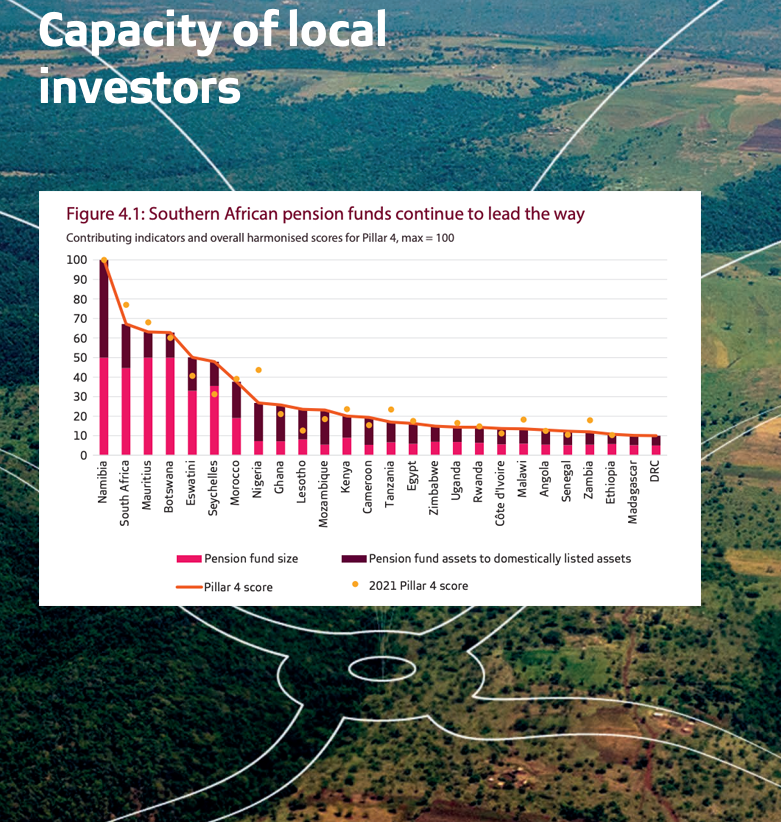
Namibia follows South Africa, Mauritius, Nigeria, Uganda, and Botswana, which were ranked first to fifth respectively on the index.
According to the chairperson of OMFIF, David Marsh, Africa now looks like an attractive investment destination based on capital market structures that actively guide risk pricing. These positive changes, he advised, must be extended by the private sector, together with the International Monetary Fund (IMF), multilateral development institutions, and the network of partner institutions around the continent.
The OMFIF’s 2022 Absa Africa Financial Markets Index aims to present a broad view of financial market progress, covering 26 countries. It also recognises the contribution of digital initiatives and innovations to African financial market development.
“Now into its sixth year, this index has stimulated transparency in markets, enhanced policy-making and allowed for the development of Africa-focused alternative investment products that will have an impact for generations to come. We look forward to continuing to contribute to the building of more robust markets and attracting investment capital,” the Chief Executive Officer (CEO) of Absa Corporate and Investment Banking, Charles Russon, added.
The Acting Executive Secretary of the United Nations Economic Commission for Africa, Antonio Pedro, said that the index also serves as an important tool for policy-makers and regulators in the development of financial markets on the continent. He added that it provides in-depth comparative analysis to support the formulation of policies for long-term financial market development.