Samuel Shinedima
DEFENSE Lawyer, Albert Titus, on Thursday morning argued in court that the authorities involved in the investigations of the double-murder case of Ernst Lichtenstrasser, have violated his client’s rights during the preliminary investigations through interviews and interrogations.
Titus, whose request for a trial-within-a-trial was granted earlier this week to challenge the admissibility of some of the evidences presented before court by the state, argued that on 7 May 2019, the accused demanded to speak to his wife, his doctor and his lawyer, but such requests were ignored.
He indicated that the state witness who testified in the matter are not assisting the court in arriving to a just and fair conclusion as they are not being truthful. He added that the witness testified that the accused was on a hunger strike because he wanted to be released on bail, while the accused actually indicated to them that he was on a hunger strike for being denied to speak to his wife and his lawyer.
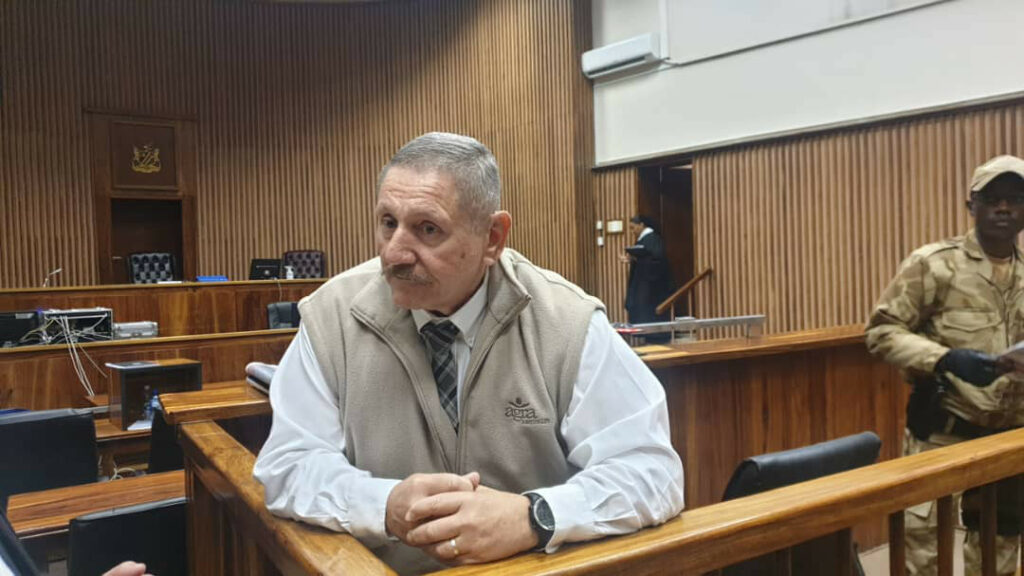
In response, the state witness, Detective Inspector Benedictus Kanyengange Iipumbu of the Namibian Police, disputed that the accused was never denied access to speak to his wife, to see his doctor or to consult with his lawyer. Iipumbu further added that the accused didn’t appear to be sick and that the accused never seemed like one that needed medical attention.
Interrogating the state witness through cross examination, Titus questioned how an inspector was able to determine such discoveries, posing more questions of concern on how a police officer could be a medical expert and determine whether or not one must see a doctor.
To this, Inspector Iipumbu alluded that he made these conclusions because the accused didn’t look sick at all, adding that he was in a good appearance.
“The accused person had always been sane and of consensus because he appeared fine,” Iipumbu said.
Probing further on the credibility and admissibility of the state’s evidence, Titus claimed prejudice on his client, arguing that even the interview recording was done with the reservist personal belongings such as cell a phone and GoPro camera.
“Further, it was the police reservist who explained the rights of the client. The interrogation was done by the reservist, while it would have been appropriate for the officials to take the lead,” he concluded.
The trial-within-a-trial is still pending before court as the state continues to lead its evidence in an attempt to prove its case.