


Business Reporter
ON the 13th and 14th of June 2022, the Monetary Policy Committee (MP0) of the Bank of Namibia held its bi-monthly meeting to decide the appropriate monetary policy stance given the current economic environment.
After deliberations, the MPC decided to increase the Repo rate by 50 basis points to 4.75 %.
The repo rate determines the rate at which commercial banks borrow money from the central bank and has a ripple effect on the cost of borrowing for consumers.
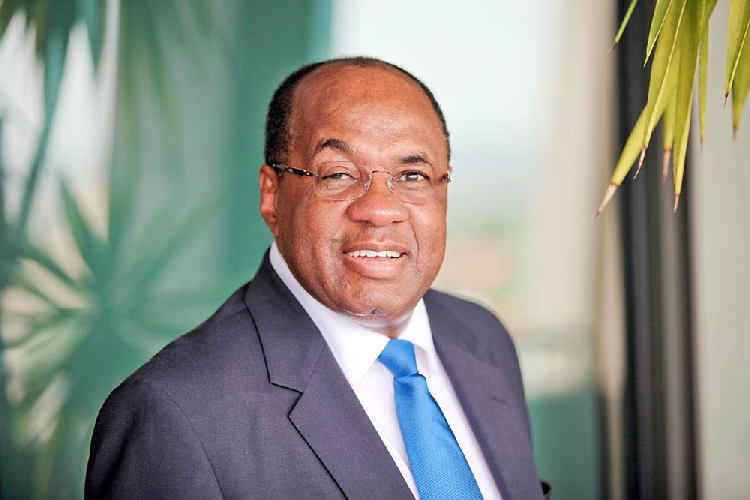
Governor of the central bank Johannes !Gawaxab said that the decision to increase the repo rate considered the elevated global and domestic inflationary pressures, the fragile economic recovery, and the need to safeguard the one-to-one link between the Namibia Dollar and the South African Rand, while meeting the country’s international financial obligations.
The MPC decision was taken following a review of global, regional and domestic economic developments.
Giving an update on the status of the domestic economy, !Gawaxab shared that domestic economic activity improved, and growth in Private Sector Credit Extension (PSCE) increased marginally, whilst inflationary pressures remained elevated.
“Since the last MPC meeting, domestic economic activity rebounded in the first four months of 2022 compared to 2021. The recovery was mainly driven by increased activity in the mining, agriculture, transport, tourism, wholesale and retail trade, as well as communication sectors,” !Gawaxab said.
On the contrary, the positive performance was offset by a continued decline in construction activity over the same period, as both public and private construction work slackened further.
Going forward, the domestic economy is expected to grow by around 3% in 2022 the central bank predicted.
!Gawaxab also noted that risks to the domestic economic outlook in the medium term continue to be dominated by the Russia-Ukraine war, climatic swings, global supply chain disruptions, higher oil and food prices, and the possible emergence of new Covid-19 variants, coupled with national vaccine hesitancy.
Domestic inflation accelerated to 4.9% during the first five months of 2022, compared to 3.2% in the corresponding period of 2021.
Inflation was mainly driven by an increase in inflation for transport, housing, and food. This was especially on account of a rise in international oil and food prices.
Namibia’s overall inflation is projected to average around 5.9 per cent for 2022, from the 6.0 per cent projected at the last MPC meeting.
The central bank governor said that although overall inflation remains within a reasonable range, inflation risk to the domestic outlook persists and mainly lingers around supply disruptions which may continue to put pressure on food and oil prices.
“Since the last MPC meeting, inflation pressure in most of the monitored economies continued to increase, mainly due to rising energy and food costs, labour shortages and supply constraints, except for Brazil and Russia where inflation moderated.
Persistent high inflation pressure compelled most other key monitored central banks to also tighten policy rates at their latest monetary policy meetings,”!Gawaxab explained.
He stated that against this background the MPC decided to increase the Repo rate unanimously by 50 basis points to 4.75%.
The governor stated that this monetary policy stance is necessary to narrow the current negative real policy interest rate that is conducive to long-term economic growth. “This policy direction is consistent with developments elsewhere in the world and the region, with policymakers acting with resolve to prevent the current acceleration in inflation from becoming a perpetual inflation spiral,”!Gawaxab said.


