Zorena Jantze
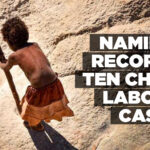
NAMIBIA has recorded a total of ten child labour cases between 2015 and 2021, whereby the Kunene, Omusati and Ohangwena Regions recorded one case each while the Kavango West and Kavango East Regions recorded four and three respectively.
This is according to statistics provided by the Ministry of Labour, Employment Creation and Industrial Relations.
Albius Mwiya, the acting Executive Director of labour, noted that it has been established through routine workplace inspections by labour inspectors that child labour is detected in the domestic, agriculture and economic sectors.

Factors contributing to child labour are, but are not limited to, poverty, cultural beliefs and prevailing economic situations in neighbouring countries which force families to send their children to look for work.
To combat this social ill, the Ministry has stated that a Namibian delegation consisting of social partners led by the Deputy Minister of Labour, Hafeni Ndemula, was in Durban, South Africa from 15 to 20 May 2022, where they will make their contribution and deliberate on the call for urgent action to combat the rising numbers of child labour cases on the African continent and in the world at large.
This is the first time that such a conference is held in Africa.
“Namibia recognized the importance of the elimination of child labour, and the worst form of child labour in particular, by making significant advancement efforts. Like other International Labour Organisation (ILO) member states, Namibia ratified the ILO Conventions including Convention 138 on Minimum Wage, 182 on Worst Forms of Child Labour, and the UN Convention on the Rights of the Child Optional Protocol on Sale of Children, Child Prostitution and Child Pornography, as a reaffirmation of Namibia’s commitment towards the prohibition and the elimination of child labour in Namibia,” Mwiya said.
He added that there are few cases of child labour and child trafficking from neighbouring countries namely Angola, Zambia and Zimbabwe, with the purpose to work due to the prevailing economic situation in the world, thus forcing children to leave their families to look for employment for the survival of their families.
“A common practice also exists whereby some parents place their children in the care of distant relatives for education opportunities and in some cases, these children are subjected to child labour under coercive circumstances.
“The Labour Act, 2007 (No.11 of 2007), prohibits the appointment of a child under the age of 14 for employment purposes and restricts the appointment of a child under the age of 16, as well as highlights the punitive measures accordingly,” Mwiya stated.
In terms of the Labour Act, it is an offence for any person to employ, require or permit a child to work in any prohibited circumstance and such person if convicted is liable to a fine not exceeding N$20 000 or to imprisonment for a period not exceeding four years or both the fine and imprisonment.