Staff Reporter
THE Deputy Minister of Labour, Industrial Relations and Employment Creation, Hafeni Ndemula, called upon all employers in Namibia to adopt a culture of safety and health in the workplace.
The deputy minister made this call at the World Safety and Health Day on Friday and stated that, according to the International Labour Organisation (ILO), an estimate of about 2,9 million workers die every year due to occupational accidents and diseases and at least 402 million people suffer from non-fatal occupational injuries.
He further explained that these injuries and deaths do not only cause suffering to victims and their families but also result in major economic losses for enterprises and economies, which can be measured in terms of health care costs, compensation costs, production losses, reduced work capacity and lower workforce participation.
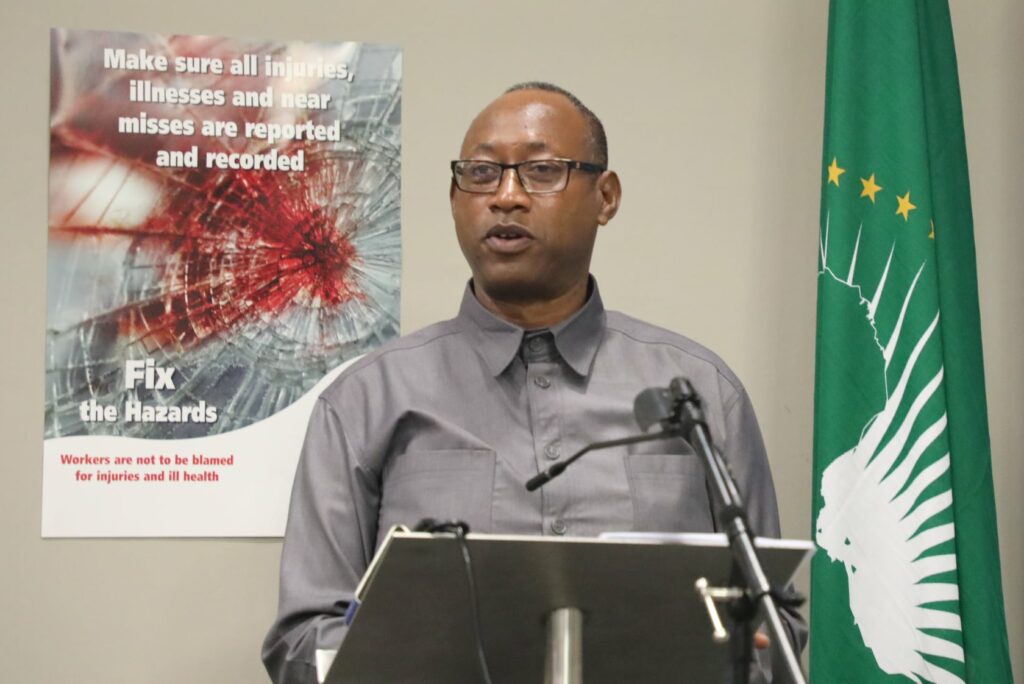
“That is too much to lose. Therefore, in 2006 the International Labour Organization adopted its convention of Promotional Framework for Occupational Safety and Health Convention, whereby the approach to create a preventative safety and health culture is well defined,” Ndemula said.
Ndemula further explained that Namibia has adopted a strategy to develop occupational safety and health preventative culture framework that aims to minimise accidents and injuries arising from or occurring in the course of work.
“It takes a well-structured system to have a safety and health programme where accidents and injury rate is close to zero. The Occupational Safety and Health Management System allows for systematic identification of hazards and risk, implementation of measures to minimize the risk exposure, effective communication, prevention of accidents,” Ndemula added.
He again called upon employers in Namibia to implement an occupational safety and health management system to minimise work related accidents and diseases.
He also emphasised the importance of social dialogue for the promotion of occupational safety and health in the workplace and stated that the Covid-19 pandemic did not only reveal how collaboration between employers and employees enhanced the effective implementation of Occupational Safety and Health (OSH) measures but also taught the importance of social dialogue in strengthening safety and health at all levels.
“Among other benefits, social dialogue contributes toward improving the quality of OSH policies and strategies, enhancing ownership and commitment and facilitating effective policy implementation,” he said
The deputy minister further reiterated that workplace safety and health is a collective responsibility that required strong authentic collaboration between the government, employers and employees.