


Maria David
THE Oshana Regional Council will appeal the decision by the Office of the Prime Minister (OPM) not to award drought relief food to the region, saying increasingly more people are food insecure and depend on aid.
Chief regional officer Teopolina Hamutumua said the decision to have the region excluded from the drought relief programme has now forced them to source funds to assist people in need.
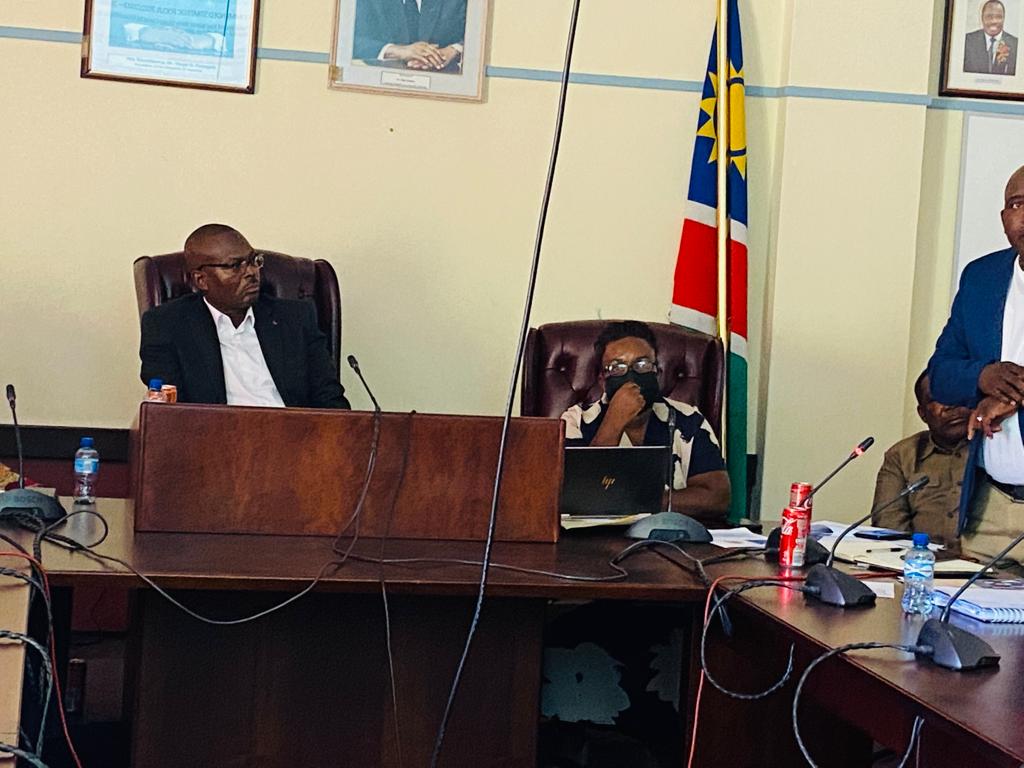
Hamutumua made the remarks on Wednesday during the quarterly meeting with regional councils and local authorities at Oshakati, saying they continue to request food aid for the masses daily.
Hamutumua stated that a budget of N$50 000 was used during the financial year 2021/22 to assist 113 people who are food insecure in the region. They were given a food parcel containing a bag or two maize meal depending on the number of people in the household.
“Hence our decision to appeal against the decision taken by the OPM to not award us with drought relief food to assist the people,” she said.
Hamutumua stated that this has now left more people in the region depending on the regional leadership alone.
She indicated many households have nothing to eat, but will not admit it.
Hamutumua then recommended the extension of the water canal with the hopes of promoting food security and youth unemployment through livelihood projects that allows all-season cultivation and crop rotations.
According to the integrated food security phase classification, approximately 659 000 Namibians are estimated to be facing high levels of acute food insecurity and require urgent humanitarian assistance.
Of these, 557 000 people are classified in Crisis (IPC Phase 3), representing 22% of the population analyzed, and 102 000, making up 4% of the population, are in Emergency (IPC Phase 4).
Most of the regions in the current period are classified in Crisis (IPC Phase 3), except Hardap, Oshana and Otjozondjupa, which are classified as Stressed (IPC Phase 2).
Meanwhile, in the regions of Kavango East and Ohangwena 40% of the population are experiencing high acute food insecurity (IPC Phase 3 or above) while in Kharas and Zambezi 10% of the population are experiencing an Emergency (IPC Phase 4) situation.


