Staff Reporter
RUSSIAN troops have seized Europe’s largest nuclear plant at Zaporizhzhia after a fire sparked by heavy shelling, Ukrainian authorities said.
Russia’s defence ministry blamed the attack on the nuclear plant on Ukrainian saboteurs, calling it a “monstrous provocation”.
The attack set fire to one of the facility’s six reactors. The reactor is under renovation and not operating, but there is nuclear fuel inside.
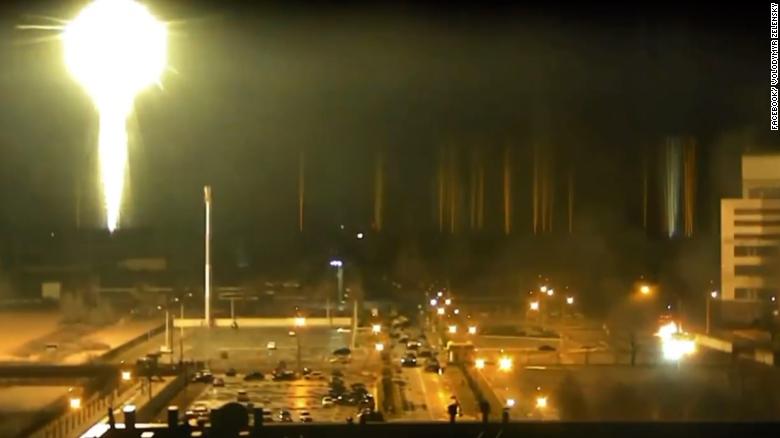
Fire-fighters struggled to get near the fire because they were being shot at but reportedly managed to extinguish the blaze.
According to Ukrainian authorities, no changes in radiation had been recorded but any loss of ability to cool nuclear fuel would lead to “significant radioactive emissions” that could “outgrow all previous nuclear power plant accidents”.
The assault renewed fears that the invasion could damage one of Ukraine’s 15 nuclear reactors and set off another emergency like the 1986 Chernobyl accident, the world’s worst nuclear disaster, which happened about 110 kilometres north of the capital.
The head of the International Atomic Energy Agency, Rafael Mariano Grossi, said the situation “continues to be extremely tense and challenging”.
The Ukrainian president, Volodymyr Zelensky, accused Russia of “nuclear terror”, as British Prime Minister Boris Johnson said Putin’s forces were “reckless”.
US president Joe Biden and Canada’s prime minister Justin Trudeau also condemned Russia for shelling the plant.
Nato secretary-general Jens Stoltenberg has warned the days to come are “likely to be worse”, calling Russia’s invasion of Ukraine “the worst military aggression in Europe for decades”. He stressed Nato was a “defensive alliance” and not seeking a war with Russia.
Stoltenberg said foreign ministers discussed a “no-fly zone” over Ukraine but agreed that Nato planes should not operate over Ukrainian airspace. He also said Nato had evidence Russia was using cluster bombs.
According to the United Nations, more than 1.2 million people including about half a million children have fled Ukraine into neighbouring countries.
Kremlin spokesperson Dmitry Peskov told Russians to rally around their president and said that what happened next would depend on Kyiv’s stance in talks, adding that Russia had “clearly conveyed to the Ukrainian side our vision of solving this problem”.
One of Russia’s last independent news outlets, TV Rain, stopped broadcasting after coming under pressure for its coverage of the invasion.
Russia’s telecommunications regulator had accused the channel of “inciting extremism, abusing Russian citizens, causing mass disruption of public calm and safety, and encouraging protests”.
“The main problem is that we were covering Ukraine objectively, as professional journalists and covering from different sides. We had journalists going live and covering the situation,” Ekaterina Kotrik, TV Rain presenter and former head of news, told the BBC.
She had to leave Russia due to the new law which could lead to prison terms of up to 15 years for people who intentionally spread what the Kremlin termed “fake” information about Russia’s armed forces.
“Fifteen years in jail for just doing your job,” Kotrik said.
“It’s the end of democracy in Russia. Any freedom is lost.”
Sources: BBC/The Guardian/Reuters/AP