Ashley Nyambe
TO digitize disability rights advocacy, the National Federation of People with Disabilities in Namibia (NFPDN) and the Southern African Federation of Disabled (SAFOD) implemented a project known as Inclusive Young Voices (IYV).
IYV is a four-month project funded by the United Nations International Children’s Emergency Fund (UNICEF).
The project aims to empower children and young people with disabilities to use social media to share experiences and to raise awareness on the issues facing people with disabilities.
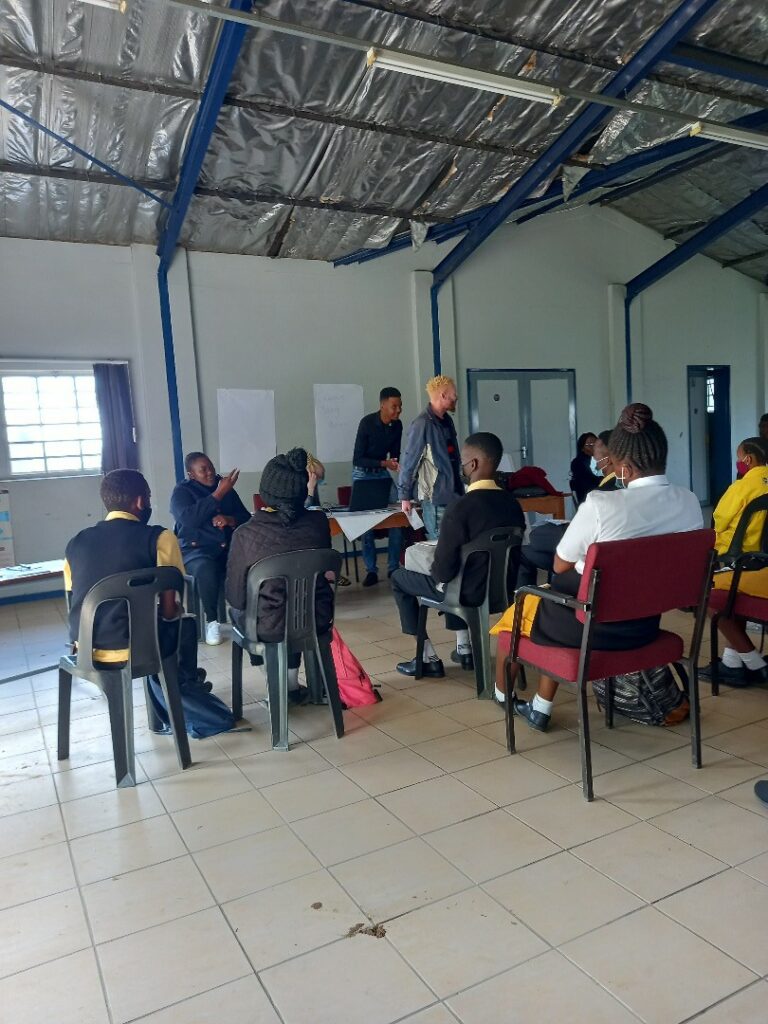
RAISING AWARENESS: The National Federation of People with Disabilities in Namibia team speaking to young people on the rights of people with disabilities. Photo: Ashley Nyambe 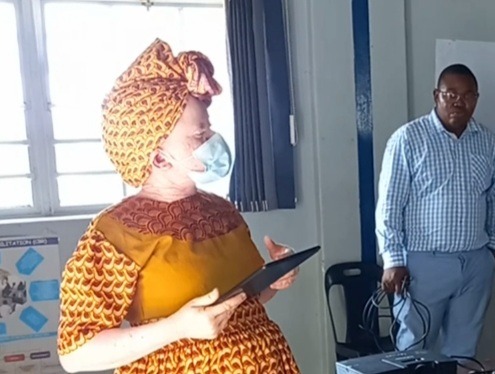
RAISING AWARENESS: Elizabeth Namwandi, Southern African Federation of Disabled (SAFOD) Namibian administrator, and Matheus Hashoongo, national chairperson of the National Federation of People with Disabilities in Namibia. Photo: Ashley Nyambe
The project has been introduced in five African countries, namely Namibia, Botswana, Zambia, Mozambique and Malawi and four ambassadors from each of the five countries have been recruited to assist with the implementation of the project.
The ambassadors have been trained on social media advocacy and will work with affiliates to highlight issues affecting people with disabilities online. Some of the issues that will be highlighted relate to the commitments governments made at the first Global Disability Summit (GDS) in 2018.
In Namibia’s case, the government committed to working towards the provision of decent, accessible shelter and amenities for people with disabilities in the country. However, according to the national chairperson of NFPDN, Matheus Hashoongo, while some of the commitments have been honoured, there is still room for improvement.
“Only 0,4% of people with disabilities are employed in the formal sector,” Hashoongo stated.
He explained that this is a result of the stigma that still exists in the recruitment process.
Hashoongo also stated that, with the exception of the Deputy Minister of Disability Affairs, Alexia Manombe-Ncube, there is a lack of representation in parliament.
“We are completely excluded from the decision-making process and yet people in parliament are making decisions on the well-being of people with disabilities,” Hashoongo remarked.
The lack of representation and limited opportunities are just some of the issues affecting people with disabilities. Many people with disabilities also struggle to access education, justice and health services in the country. According to Hashoongo, this shows that the country is not inclusive yet.
Hashoongo is not the first, nor the only person to raise awareness on the issues affecting people with disabilities. There are a number of organisations and federations, like the NFPDN, that are dedicated to the same cause. However, due to a lack of funds, many are restricted in their efforts.
“We are not really empowered, financially,” Hashoongo explained.
He is therefore requesting that the government provides organizations that fight for the rights of people with disabilities with subsidies for their operations.
RAISING AWARENESS: Elizabeth Namwandi, Southern African Federation of Disabled (SAFOD) Namibian administrator, and Matheus Hashoongo, national chairperson of the National Federation of People with Disabilities in Namibia. Photo: Ashley Nyambe
RAISING AWARENESS: The National Federation of People with Disabilities in Namibia team speaking to young people on the rights of people with disabilities. Photo: Ashley Nyambe