


Staff Reporter
THE Namibian Government endeavours to do more in delivering efficient, qualitative and equitable educational services to those living in remote areas, particularly women, girls and other vulnerable groups.
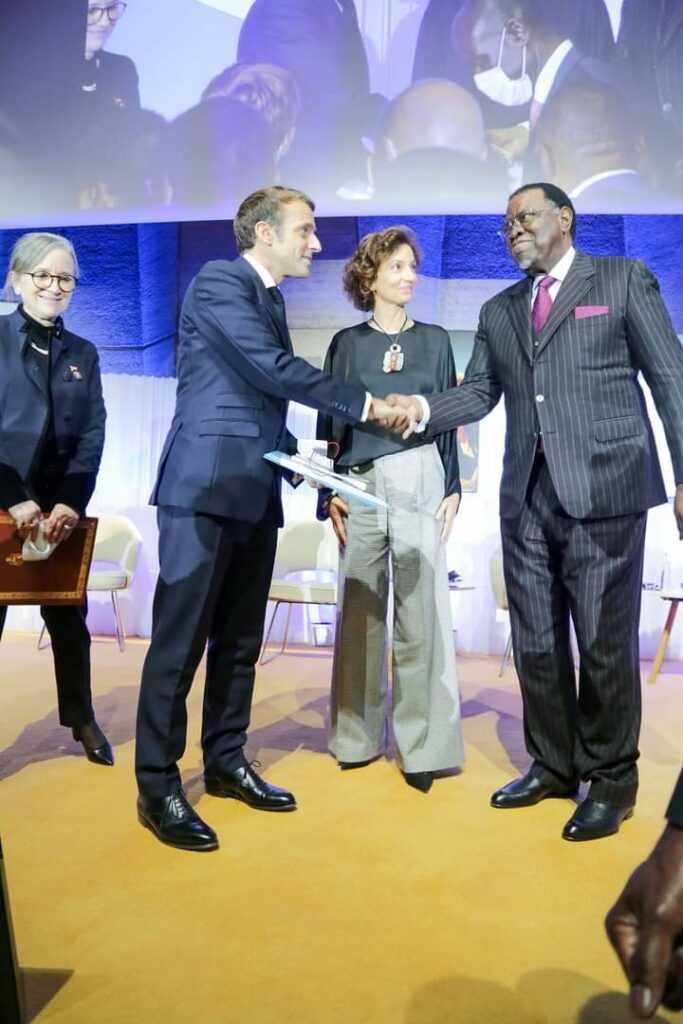
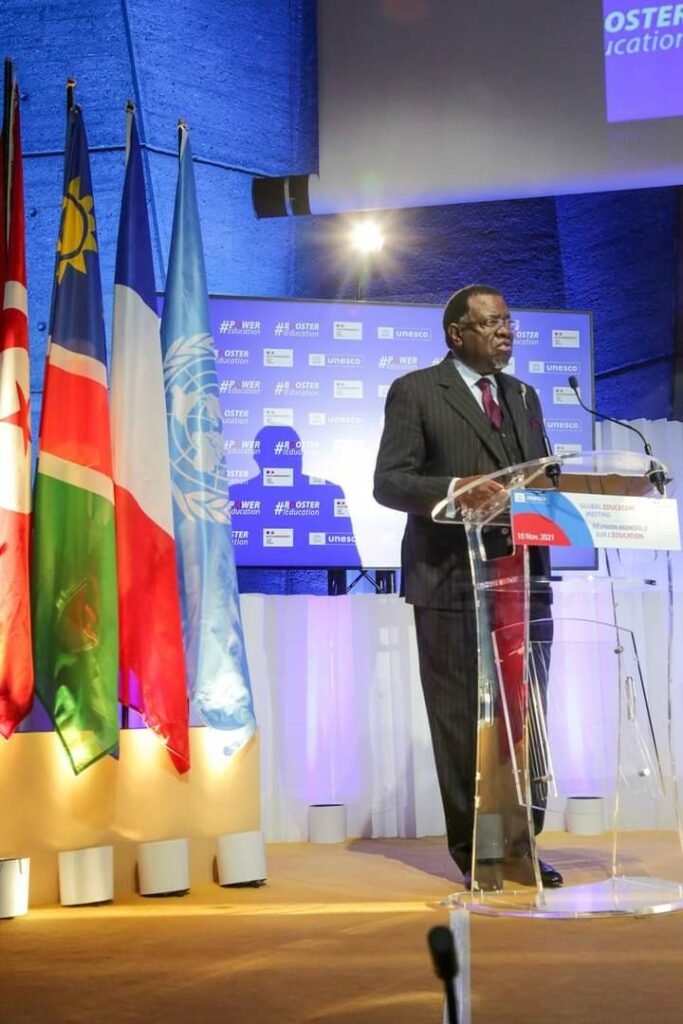
This was the message of President Hage Geingob on Wednesday at the 2021 Global Education Meeting in Paris.
Although Covid-19 has eroded some of the gains government has made in making education for all a reality, Namibia has continued to invest a high percentage of its national budget on education, making the sector the largest recipient, Geingob said.
“In the last year alone, the Namibian Government spent 28% of total government expenditure on education. This is above the 15 to 20% threshold aspiration they are seeking through this meeting.”
He said government rolled out a stimulus package to public and private educational institutions at the start of the pandemic and nationwide lockdown to strengthen information and communication technology infrastructure, including bandwidth for online teaching and learning.
“This invisible enemy, Covid-19, has exacerbated inequalities within and between countries, creating tensions which if not addressed could lead to instability,” Geingob stated.
The president said education is indeed the greatest equaliser and common denominator, irrespective of socio-economic differences and backgrounds. According to him, it is only through education as a public good that he, the son of a farm worker at a white-owned farm, could become the president of Namibia, or that the daughter of a cleaner could become a medical doctor.
“Education is not a commodity. We should reaffirm education as a public good, which is vital in building sustainable and inclusive societies,” Geingob said.
The United Nations Educational, Scientific and Cultural Organization (Unesco) co-hosted, with the government of France, the meeting’s high-level segment, aimed to create a global political momentum to raise the profile of education and its investment imperative.
It adopted the Paris Declaration to renew national and international leaders’ commitment to invest in education, domestically and internationally, and to accelerate progress toward Sustainable Development Goal 4 (Quality Education).
“Today is therefore significant for the adoption of the Paris Declaration, which further underscores our commitment to a Global Partnership for Education. Education remains our best bet for a fairer and better world. In that vein, Namibia supports fully the Paris Declaration’s call for investing in education for the future of humanity and our planet.” Geingob concluded.


