Niël Terblanché
TECHNOLOGICAL innovation is set to bring medical services closer to the people while defeating obstacles such as floods and inaccessible roads in the rural areas of Namibia.
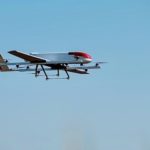
The Namibia Institute of Pathology (NIP), the United Nations Children’s Emergency Fund (UNICEF) Namibia in partnership with and John Hopkins University Medical Drones have launched a project to make use of drones to bring medical services closer to people in far-off and difficult to reach places.
The partners in the project looking for an international entity, considered as a lead vendor, for last-mile drone delivery services in Namibia.
This project aims to use drones for the delivery of cold-chain and non-cold-chain medical commodities, patient testing samples, testing kits- including COVID-19 testing kits, medical supplies, vaccines, and other medicines to and from five local health clinics in the Zambezi region.
The clinics that will be serviced by the drone program are Schuckmansburg, ImpalilaIsland, Kanono, Imbalasinte, and Itomba. The drones will carry their lifesaving cargo to and from the main laboratory in Katima Mulilo.


The service which will first be tested for a period of four months is envisaged to remove obstacles such as annual floods that make roads inaccessible for periods of up to six months. Floods in the Zambezi Region normally cut communities off from access to vital health and laboratory diagnostic services.
Such a service provider will be required to have a Namibian partner which will be responsible for service provision. The service provider will be required to run sustained drone delivery operations that will deliver efficient, quality, and timely technical services for the proof of concept period of four months.
All five clinics earmarked for the trial run, have access to a steady power supply from solar panels. The panels are not powerful enough to run deep freezers but can be used to charge electronics such as drone batteries.
The drones that will be used in the trial run must have a capacity to carry a minimum net weight of 1.5 kilograms for a distance of at least 70 kilometres without landing, recharging, or refuelling.
The central hub in Katima Mulilo will be used as a landing, maintenance, and recharging centre for the drones.
Of all the specimens collected from the five clinics, more than 90% are tested at the Katima Mulilo Laboratory and have an average turnaround time of three to four weeks.
Most of that time is spent in sample transport. More than 20% of samples are rejected because of spoilage during transit and the drones will eliminate most of the transport challenges.