Staff Reporter
THE National Safe Schools Framework is currently being reinforced to guarantee that children with disabilities, orphans and vulnerable communities do not fall victim to Sexual and Gender-Based Violence (SGBV) and other types of abuse.
President Hage Geingob attended the Extraordinary Session on Education post-COVID-19 of the High-Level Segment of the 2020 Global Education Meeting on a virtual platform and while delivering his address, said that a strong policy framework for inclusion in the education sector ensures that the Ministry of Education is responsive to the needs of children with disabilities, orphans and vulnerable status inclusion, which includes equity and gender equality.
Geingob thanked UNESCO and the governments of the United Kingdom, Ghana and Norway for convening the very important meeting at a critical juncture for the future of humanity and children’s education.
“The call to re-imagine and to recommit to education is opportune, at a time when the COVID-19 global pandemic is leaving millions without jobs and exacerbating poverty and exclusion. I have always held the deep conviction that education is the greatest equalizer,” he said.
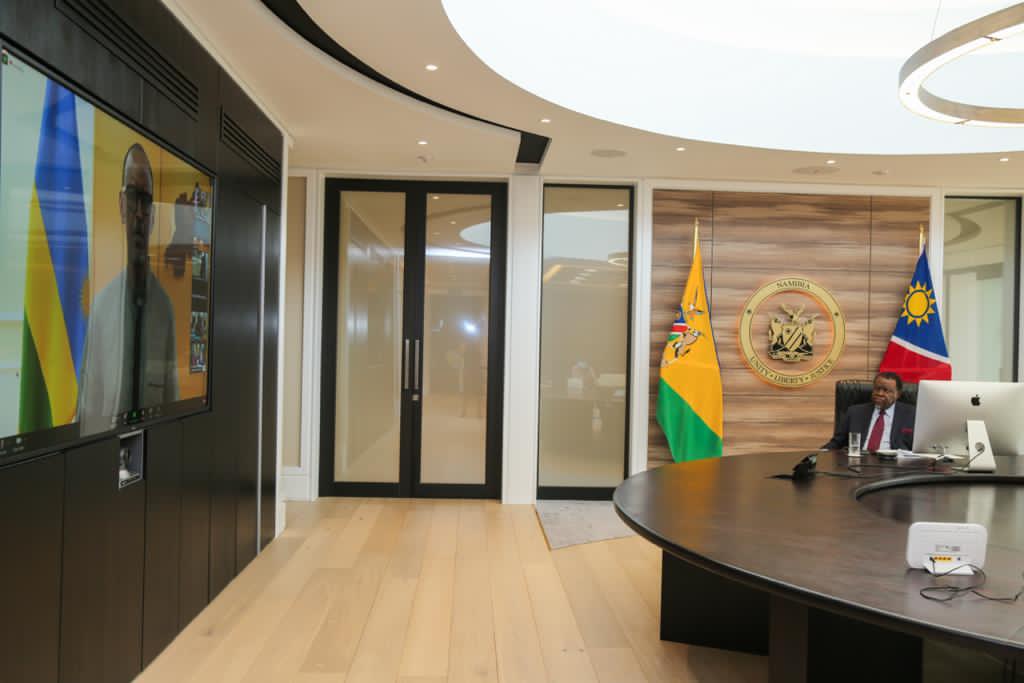
ITC EDUCATION: President Hage Geingob delivers his address at the High-Level Segment of the 2020 Global Education Meeting on a virtual platform. Photos: Courtesy of Mercia Windwaai Namibian Presidency 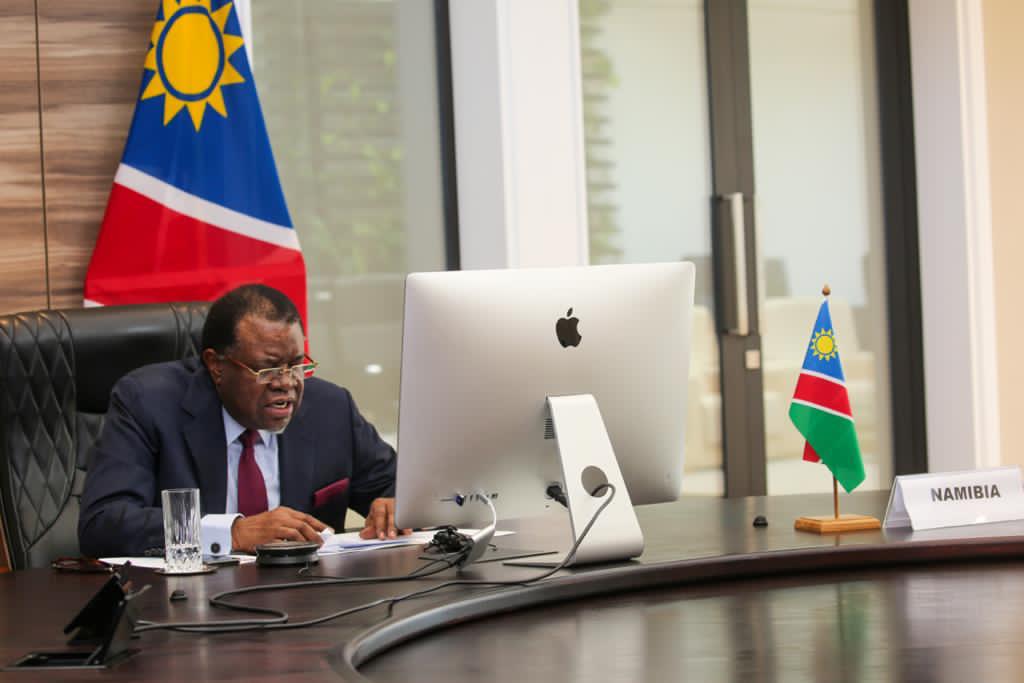
ITC EDUCATION: President Hage Geingob delivers his address at the High-Level Segment of the 2020 Global Education Meeting on a virtual platform. Photos: Courtesy of Mercia Windwaai Namibian Presidency
Geingob told delegates that the Namibian government, in line with the Sustainable Development Goal No.4, places importance on access to quality education.
“Our education system, which has been based on access, equity and quality, receives more than 20% of the national budget. We have succeeded in expanding access and equity in the education sector. Unfortunately, COVID-19 threatens to reverse the gains we have made in pursuance of the goal of quality education for all. Therefore, during this period of COVID-19, where we have to ensure that no learner is left behind, additional resources have been allocated to the improvement of infrastructure for water, sanitation and learner accommodation,” he said.
The President informed delegates that under COVID-19, the Namibian government had to ensure that the reopening of schools occurred under conditions that are consistent with the country’s commitment to health as the biggest priority.
He said the safe return of learners to school was guided by the World Health Organisation’s COVID-19 best practices for ensuring physical distancing, including time based cohorts or platooning.
“We are proud to state that children have returned to school and their situation is closely monitored through decentralised structures of Government,” he said.
Geingob informed delegates to the virtual meeting that COVID-19 has without a doubt exposed the digital divide among students, families and geographical locations.
He said the pandemic is challenging governments to think anew about teaching and learning.
“In order to harness equitable connectivity and technologies for learning, the government, in a public-private smart partnership, including with communities is now investing in Information and Communication Technology (ICT) Education by ensuring that all education facilities are well equipped with ICT infrastructure, and also ensuring that all educators are capacitated when it comes to ICT usage,” he said, adding “We have learnt that online information services open up real possibilities of keeping parents much more engaged with what their children are doing, and parents are able to have a dialogue with the school on how they are progressing. Indeed, the post-COVID-19 environment is showing the way that technology is the key to personalised learning and we have accelerated our interventions in that regard. Yes, COVID-19 is a challenge, but it has also opened up the opportunity to leverage hybrid models that includes online technologies and physical presence for better learning outcomes.”
Geingob informed the meeting that the Namibian government stands ready to support better coordination and strengthening of mechanisms to accelerate the implementation of SDG-4 in the context of COVID-19 and beyond.