Niël Terblanché
THE export of live animals to countries in the Middle East from countries in the Southern African Region will open up new opportunities for Namibians residing in Namibia’s Harbour towns.
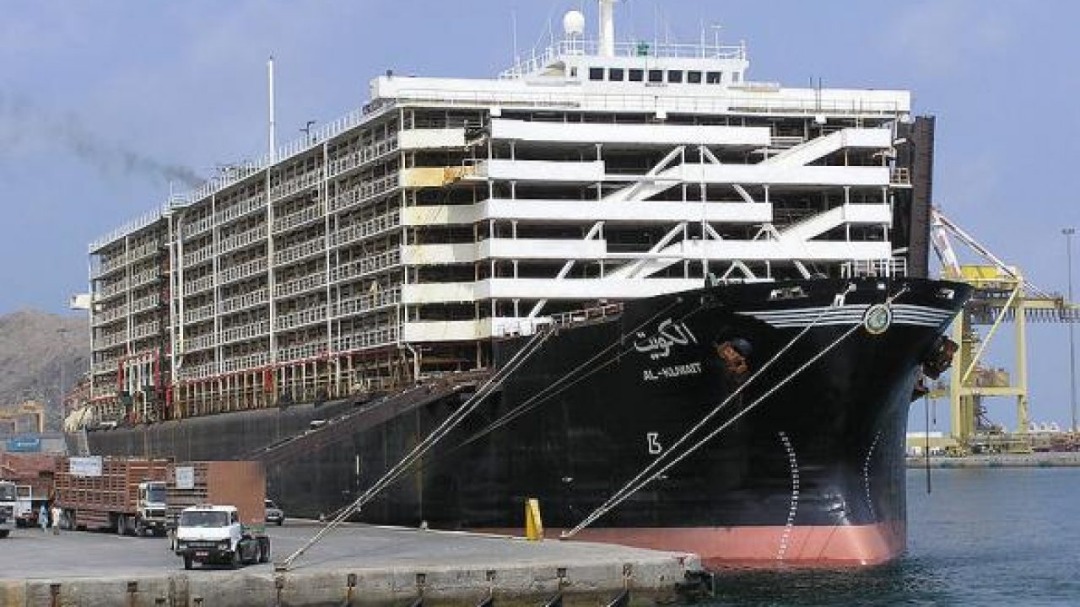
TradePort Namibia launched a bid in August to get environmental clearance for a proposal to transport between 30 000 and 125 000 cattle, sheep and goats from countries like South Africa and Botswana to Kuwait and other middle-eastern countries on the hoof.
Kuwait, like some other middle-eastern countries, is a fundamentalist Islamic country, which means that animals need to be slaughtered according to strict Halaal principles in the country where the meat will be consumed.
TradePort plans to transport the livestock by truck through the border points at Ariamsvlei and Gobabis, where the animals will be kept in holding lots for clearance through the borders before continuing their journey to the ports of Lüderitz and Walvis Bay from where they will be loaded onto a ship for export to Kuwait.
TradePort stated that in compliance with the Environmental Management Act No. 7 of 2007, to determine the potential impact of the plan, an environmental scoping report and management plan will be compiled and submitted to the Department of Environmental Affairs and Forestry to apply and obtain an Environmental Clearance Certificate.
The company said it is also aware that as stipulated in the Environmental Impact Assessment (EIA) Regulations (paragraphs 7 and 21); public consultation is a pre-requisite and forms an integral component of the EIA.
TradePort said in its proposal that it believes that the venture would contribute to improving the socio-economic standard of Namibians.
The company believes that jobs will be created at the holding lots at the borders, as well as at the harbour towns.
Besides job creation, workers will also be able to receive training in the various aspects of animal care and preparation.
The impact of the project on the health and safety of Namibia’s marine environment (during the handling, loading at port and shipping of the livestock); Namibia’s land environment (the transport and erection of pens and feeding); and animal welfare (during the entire transit), are requirements that will be addressed in the EIA.
The company said it was aware the transit of livestock is reported to be of high-risk to animal welfare, particularly during summer.
TradePort is the company behind the bulk export of manganese from South Africa through the port of Lüderitz and despite some initial difficulty in the beginning, the process is currently running smoothly and has increased the throughput of cargo with more than 200%.
Namibia’s harbours already enjoy preferential treatment by citrus exporters in South Africa because of guaranteed short handling times and because their product can reach markets in north America and Europe much quicker and the subsequent reduced shipping costs.