


Niël Terblanché
THE advent of the COVID-19 pandemic and the disastrous Twaloloka fire in Walvis Bay in July placed the plight of people that does have proper housing in the Erongo Region in the spotlight.
While delivering his maiden State of the Region Address, the Regional Governor, Neville Andre, focussed on the lack of adequate housing for a large portion of residents in the various towns in the region.
“His Excellency the President declared 2020 the year of Introspection. We have to take a brutally honest look around us, the shacks that the people are still living in, the land earmarked for development and have budgetary allocations made thereto is still standing bare,” Andre said.
He said the pandemic has forced the region to revisit its approach to the implementation of national development programs.
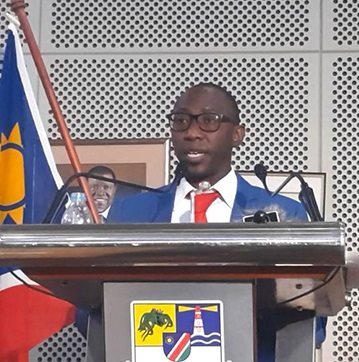
“This virus has exposed and significantly exacerbated the existing socio-economic realities of our people, it has also tested the limits of all our systems. Our region is faced with the critical need, of providing serviced land and access to housing. Furthermore, our exposure as a non-industrialised economy, we are challenged in creating jobs and in so doing limited to provide access to potable water and social safety nets for our people that have lost their jobs and livelihoods,” he said.
The Governor said the urgency for delivery of serviced land, housing and safety nets is now at its highest.
“And I want to be extremely clear and unequivocal about this, there will be zero tolerance for the lack of urgency with regard to implementation of regional development programs and initiatives in the Erongo Region. As a region, the inefficiencies in our systems have been exposed by COVID-19, now we are trying to get things done hurriedly that should have been done or put into place a long time ago. This is unacceptable, to me and to the citizens that we are serving,” Andre emphasised.
He said as Governor he takes full responsibility for all the gaps and stated that he wants to acknowledge with humility to every resident of the Erongo Region, that he will ensure that the regional authority will do better in responding to meet the needs of the residents.
Andre stated that the medium to long term strategy is to provide housing for ultra-low, low- and medium-income residents of the region.
People living in backyard shacks, residents of Otweya Informal
Settlement in Walvis Bay and other densely populated areas of the harbour town will soon be relocated to 30 000 erven at the new Otweya site and Farm 37.
“The decision has been ratified by the Walvis Bay Council to establish a new township. Farm 37 will be ready for occupation as at the end of October 2020,” he said.
He indicated that the Swakopmund Municipality had already commenced with a decongestion strategy and has constructed 133 houses through the Afrina Housing development partnership while also fast-tracking provision of houses to residents of the DRC informal settlement.
The governor said plans are underway to create a new township at Wlotzkasbaken and that a total number of 258 erven will be connected to the water and reticulation system, with water meters.
“The new township at Wlotzkasbaken will eventually have approximately 300 residential, industrial and business erven,” he said.
Governor Andre said the regional authority was created to work and serve all the people of the region.
“My office is going to make it a priority to ensure we remain in the service of the people of the Erongo Region. We need to strengthen the interface between the citizenry, political leadership and office bearers, through having an open day, once every second month to listen and solve the problems and issues raised by the electorate,” he said.
The Governor said delivery and accountability for public funds entrusted in the care of regional authority is now a non-negotiable.
“If we as leaders are not visible, accountable and do not make a tangible difference in the lives of our citizens through effective implementation, we render ourselves irrelevant and obsolete to our people as well as the positions we occupy,” he concluded.


