Staff Reporter
AUTHORITIES in Beirut, the capital city of Lebanon, are still counting fatalities after the third biggest explosion in recorded history killed more than a hundred people, wounded more than 4 000 and left 300 000 people homeless on Tuesday.
The death toll of the blast has surpassed a hundred and has left hospitals in the city overwhelmed with thousands of wounded people.
Lebanon’s main grain, silo, at the Beirut port was also destroyed in a blast, leaving the nation with less than a month’s reserves.
Lebanon needs a reserve for at least three months to ensure food security.
The Governor of Beirut, Marwan Abboud, told media outlets that around half of the city has been damaged by the explosion, amid warnings that the death toll was likely to raise far beyond 100, with many victims still trapped under rubble.
Interior Minister Mohammed Fahmi told local media outlets that the blast was likely triggered by more than 2,750 tonnes of ammonium nitrate.
The industrial chemical, used for fertiliser, had been stored at a warehouse at the dock since it was unloaded from a seized cargo ship in 2013, he said.
The shipload of fertiliser that was destined for Mozambique was confiscated by the Lebanese port authority after the vessel that carried the consignment had to dock in the port of Beirut following technical problems.
The ship was abandoned by its owners and crew and the dangerous cargo was offloaded in a warehouse known locally as Hangar 12.
Since 2014, Lebanese customs officials sent at least five letters to the judicial authorities to get permission for the dangerous materials to be removed.
It is suspected that the fertiliser exploded after it was ignited by a fire that raged in an adjacent building where fireworks were stored.
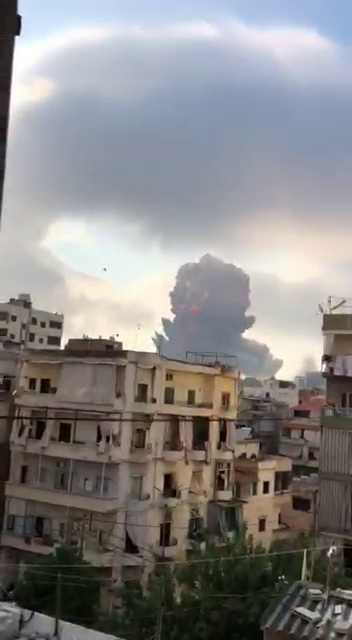
Besides the huge white vapour cloud that emanated from the initial blast, the giant orange cloud that towered over the city following the explosion was indicative of nitrate exploding, experts said.
The explosion also released toxic nitrogen dioxide into the air, which could lead to further injuries and casualties.
Lebanese President Michel Aoun on Wednesday called for an emergency cabinet meeting and for a state of emergency to be declared.
Officials said they expect the death toll to rise further as emergency workers dig through the rubble to search for survivors.