Niël Terblanché
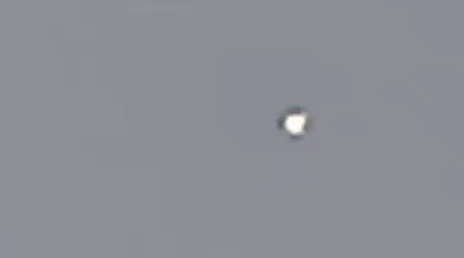
As the was sun setting over the Walvis Bay Lagoon, residents took to social media in their droves to find out from friends what it is they saw in the sky above their heads.
Many thought at first that it might be a drone that was flying over the town, but because of the extremely slow airspeed of the unidentified flying object, many people quickly concluded that it might be something else entirely.
Aircraft enthusiasts took to the internet and established that the object they saw floating in the sky is in fact a balloon. The Flightradar24 website identified the balloon as belonging to Project Loon.
A quick look on the website showed that three more of the balloons are on their way to the Namibian coast and that another is already floating over south-eastern Angola.
Further searches on the internet showed that Project Loon is an initiative launched by Google to bring internet access to remote regions not served by traditional infrastructure. In this regard, the project liaises with local communications service providers to strengthen existing services.
According to the project’s website, a group of Loon balloons creates a network that provides connectivity to people in a defined area in the same way a group of towers on the ground forms a terrestrial network.
The huge helium balloons contain equipment that connects them to each other, to ground relay stations, and to the internet. The balloons float in the stratosphere gaining and losing altitude to find the right wind patterns to carry them where they need to be. Loon balloons travel approximately 20 kilometres above the Earth’s surface in the stratosphere, well above airplanes, wildlife, and weather events.
Loon balloons can reach countries around the world from the project’s launch site in Puerto Rico and are currently being used to boost internet connectivity over Mozambique and Kenya
Because the balloons use the wind to navigate and to reach their end destination it takes some time and sometimes some erratic flying.
What could, however, not be established about the two balloons already over land and three others still on their way, was what their final destination is.
Because these balloons float extremely high up it is very difficult to spot them under normal conditions, but in Walvis Bay, the setting sun caught the balloon at the correct angle that caused it to shine brightly which enabled residents to see it clearly.