


Staff Reporter
THIRTY-FIVE households that are unable to feed their children who in turn have resorted to begging for food on the streets received food assistance from the Regional Division of Gender Equality, Poverty Eradication and Social Welfare over the weekend.
The purpose of providing food to the households in the Omaheke Region is to ensure that the children stay off the streets and remain indoor to minimise their exposure to coronavirus.
The lack of food at home is one of the major reasons children in the region live on the streets.
Tauno Iileka, the ministry’s spokesperson, stated that this is in addition to other social issues such as encouragement by parents for the children to go to the streets and beg for food and money to sustain the households, lack of supervision by parents at home and pressure from their elder peers who have become accustomed to living on the street.
Some children come from child-headed households where there are no parents to take care of them.
Twenty-five households in the Gobabis Constituency and ten at the Otjinene Constituency received the food assistance over the weekend.
Each household received a food parcel consisting of various items such as maize meal, tinned fish, cooking oil, baking flour, soap, corned beef, instant yeast, beans, lentils, salt, bread, tea and sour milk.
Each parcel is valued between N$450.82 and N$809.82.
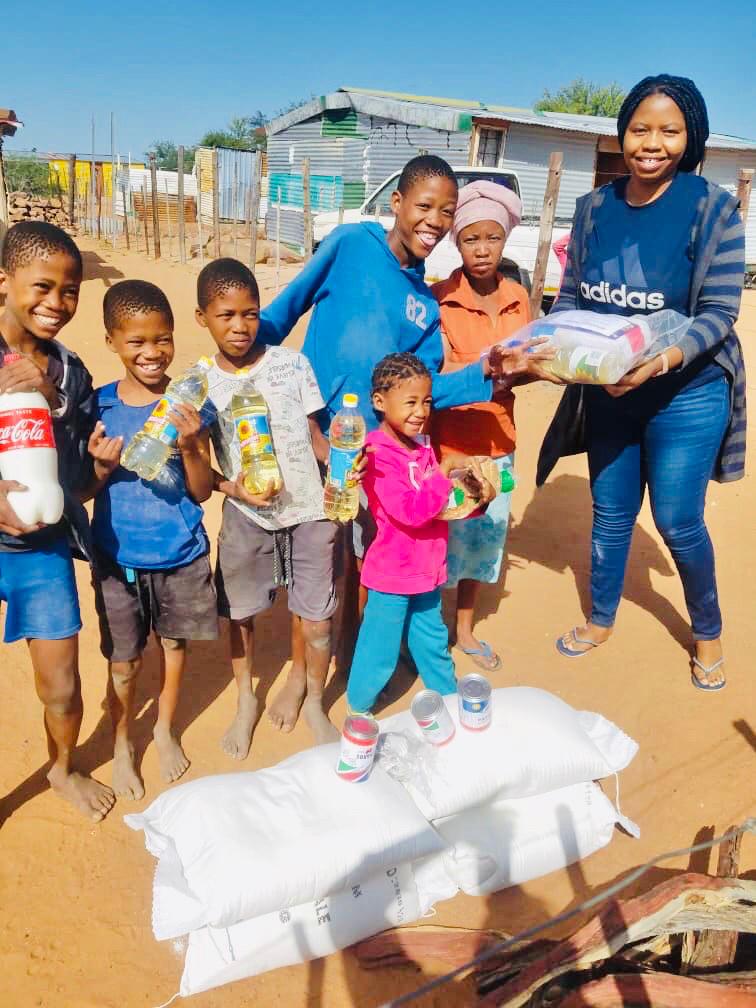
Iileka further stated that the food items were obtained from the Regional Drought Relief Programme, Regional Food Bank and individual donors, at a total amount of N$24,753.70.
With the assistance of two caregivers, Theresia Hasotosi, usually provides two meals per day (breakfast and supper) to the children living on the streets.
However, in response to COVID-19, the Division of Gender Equality decided to supplement her efforts by increasing the meals to three times a day as from 28 March 2020.
This will cost N$16,000.
The children had been receiving their meals at the Women Centre in Gobabis where they were accommodated during the day and they would be taken back to their homes after supper.
This arrangement ended on Friday, 17 April 2020, with the provision of food parcels to the households commenced and will continue for the duration of lockdown depending on donations received.
The Division held a meeting with the children and their parents on the same day where Social Workers, Cynthia Muna and Namvula Kiimbi, discussed child care issues.
Eighteen children and 13 parents attended the meeting.
Issues discussed include parental responsibilities towards their children, the physical and mental wellbeing of children, supervision of children, discipline, reintegration of children into schools and off the streets, misuse of children’s welfare grants by parents as well as the effects of COVID-19.
Parents were encouraged to approach social workers when they faced problems with their children instead of neglecting them.
Forty-one children are known by the Division of Gender Equality to be living on the streets, including 31 from Gobabis and ten from Otjinene. Therefore, six households still need to benefit from this programme.


