


Staff Reporter
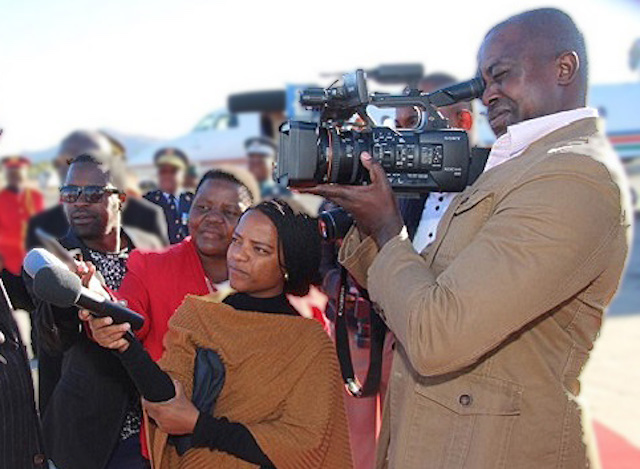
A NUMBER of media houses have raised concerns that government’s efforts to enforce social-distancing regulations to curb the further spread of the coronavirus has turned into a form of censorship where the private owned media organisations are largely locked out.
The complaint, lodged by the Namibia Media Trust (NMT), follows an incident yesterday where with the exception of one, only the state-owned media houses were allowed to attended a press briefing at state house on the government’s Covid-19 National Response Measures.
Those invited to attend were the national broadcaster, the Namibia Broadcasting Corporation (NBC), which includes the radio and television services, the state news agency, the Namibia Press Agency (Nampa) and the free-to-air television station, One Africa TV.
The rest of the media houses in the country were being encouraged to keep updated via the NBC and NamPresidency social media platforms.
Zoe Titus, Director of NMT, stated that whilst NMT appreciates the efforts undertaken by government to ensure the safety of journalists during this global crisis, government should be cautioned against disproportionate attempts to curb media freedom.
“By not defining the criteria used to select who may cover critical government information sessions, you are excluding those that may demand more accountability. Press conferences are an efficient forum for government to share information with the public and media, and form a vital part of the information infrastructure in a time of crisis,” Titus stated.
She added that journalists from different media houses that serve different audiences and interest groups are able to interrogate the information shared and can, in turn, pose questions of public interest that reflect the scope and diversity of their audiences.
“[Yesterday’s] press briefing was an act of censorship that robbed the broader media fraternity of that opportunity, and ultimately the public. Independent journalism is essential to finding an end to the pandemic and mitigating the consequences of the spread of Covid-19,” Titus stressed.
She urged government to take steps to ensure that the media freedom and the rights of journalists are not disproportionately restricted.
She concluded that limits on the media risks not only harming freedom of expression, but also hindering efforts to stop the spread of the virus by depriving the public and decision-makers of accurate and reliable information.
“We appeal for proactive and transparent disclosure of information in a timely manner to facilitate the work of the media and, more importantly, to instil public trust in the ability of our government to lead the fight against this devastating disease,” she said, adding “A state of emergency cannot be used as a pretext to censor news or implement regressive regulations against media freedom.”


